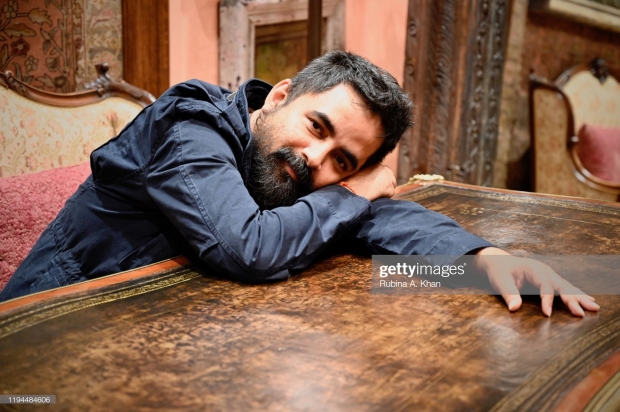
RUBINA’S RADAR | THE SABYASACHI INTERVIEW

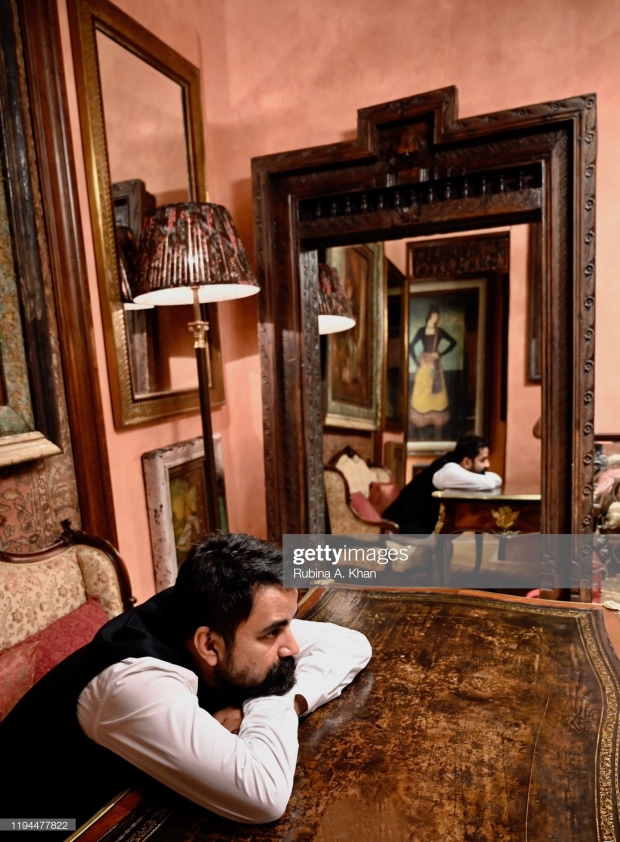
Sabyasachi is India’s most exalted fashion designer, and he knows that. But he’s not lost to his own nous in vanilla vanities and egotism, with the veneration around his fashion métier. Sabyasachi the person, remains grounded, but Sabyasachi the brand, has taken flight, kissing open skies, with the launch of Sabyasachi Jewellery on October 22, 2019 in Mumbai. Sabyasachi Jewelry is his first standalone jewellery store in the country, located three flights up from the Sabyasachi Calcutta clothing store in Kala Ghoda. His bridal collections have played the role of a bride’s confidant for two odd decades, but his jewelry, in his own words, has turned Sabyasachi into a girl’s best friend today. His business smarts have expanded the realms of his brand rather successfully as his couture loyalists can’t quite get enough of the bejeweled lust box he’s opened up. They’re now seeking appointments for couture and carats, both.
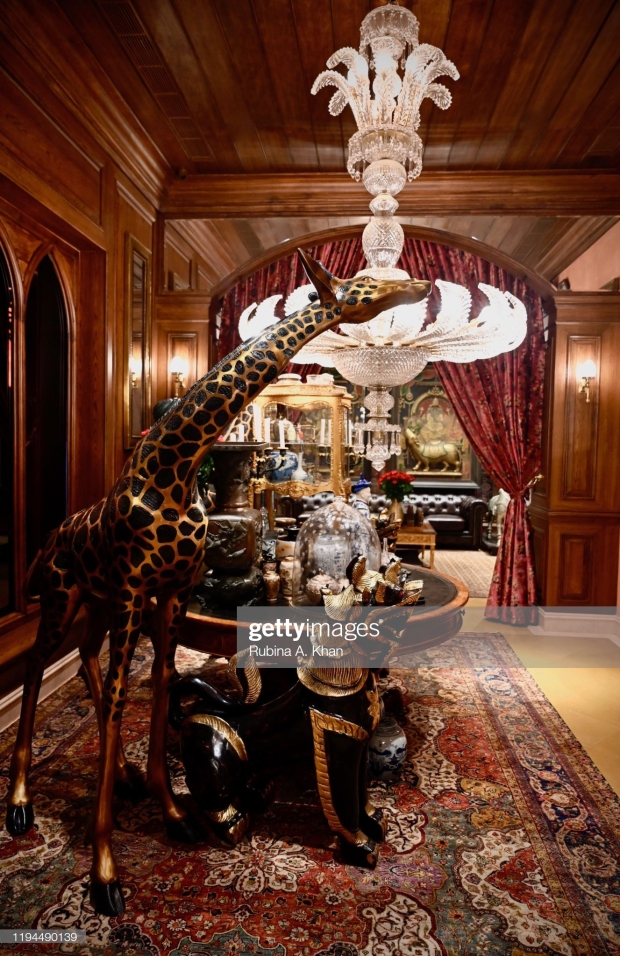
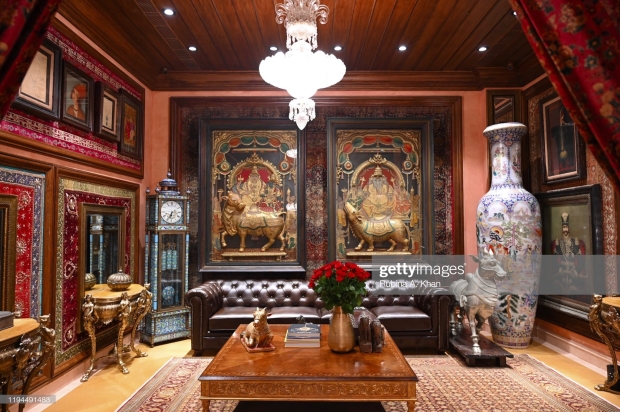
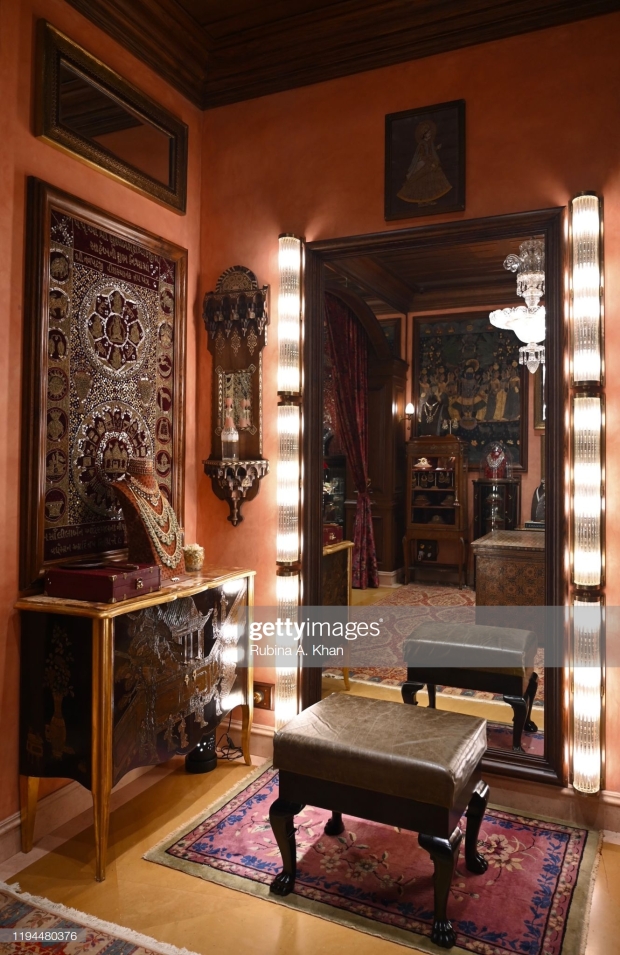
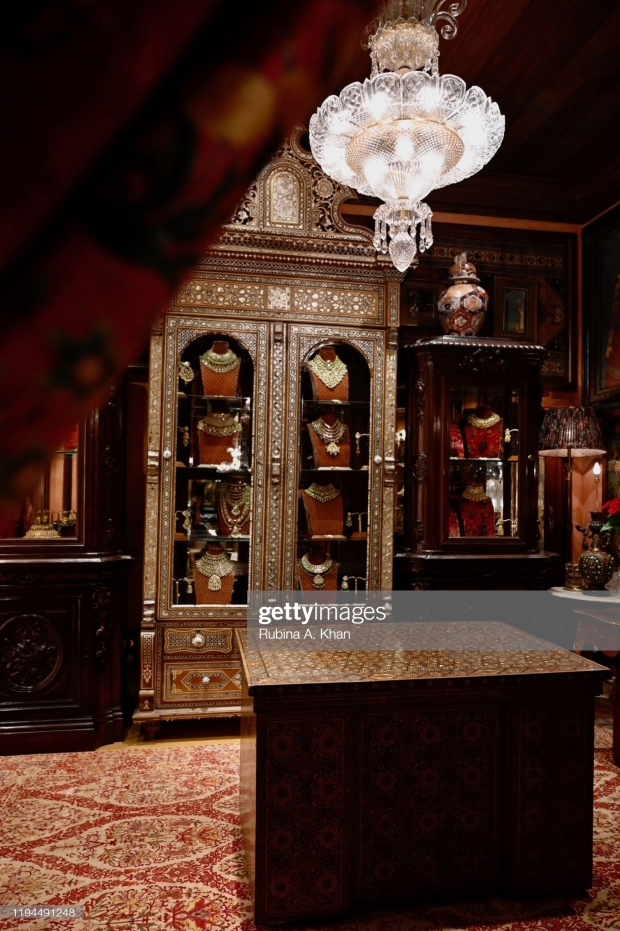
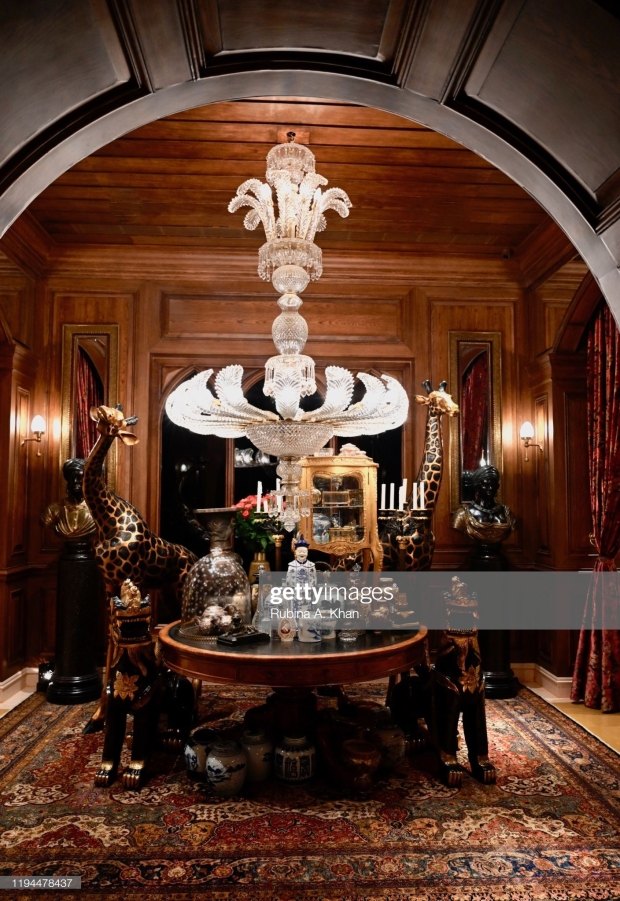
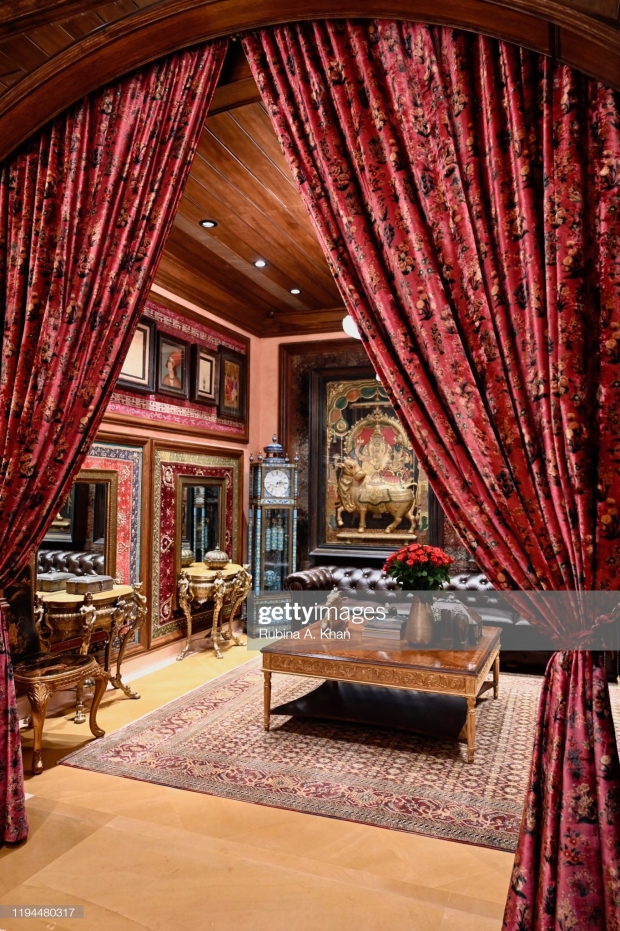
gettyimages-1194484606-2048x2048Life-sized giraffes, fresh red roses, vintage artefacts, armoires and furniture in brass and solid wood, glimmering chandeliers, floral carpets, velvet drapes, tchotchke, conversational wall art in Hindi and Arabic make up the grandiloquent design speak of the store, alongside his framed jewelry sketches, Chinese, African and Indian art and design collectibles.  In the artistic polarity of it all, the pièce de résistance are the gleaming emeralds, sapphires and rubies that seem to be telling stories of empresses and emperors of sovereign worlds gone by. Lilting American soul plays in the background at Sabyasachi Jewellery, which is in sharp contrast to the melancholic strains of Indian music that waft through his Sabyasachi Calcutta clothing stores across India. Invoking nostalgia is the couturier’s masterstroke, and it works.
gettyimages-1194490139-2048x2048
Edging steadily onto the global playing field with heterogeneous collaborations with Christian Louboutin (Paris) in 2015, Pottery Barn (USA) in 2016, L’Oreal Paris (France) in 2018 and Thomas Goode (UK) in 2019, Sabyasachi is an insatiable man, seeking immortality through his work. In a world where commitment is precious luxury, he’s the only Indian designer to have committed fans – a hallowed dominion so far reserved for Bollywood and cricket personalities in India. Sabyasachi can neither play cricket nor act, though at best, he thinks he’s a good mimic. And he is indeed.

Rubina A Khan converses with Bengal’s very own tiger, Sabyasachi Mukherjee, at Sabyasachi Jewellery in Mumbai:

The opening of Sabyasachi Jewellery is a portentous moment in Indian jewelry history. How are you feeling?
I feel relieved as the store is finally done – it took us about eight months to, actually not to do the store, but to collect everything, all the collectibles because I wanted Sabyasachi Jewellery to look like a modern museum…a bit of Indian art and craft, a bit of global craft, furniture from all over the world. We had a 16-foot Ming vase that had to hoisted up into the store through a crane as it couldn’t come through the elevator or the staircase. And I was very worried that it would break. It’s a very fragile, temperamental store. And I’m glad that the grand end worked out.
gettyimages-1194491483-2048x2048
What attracted you towards the business of making jewellery in an economy where clothing giants are shutting shop globally due to slack sales?
I have a theory that when the economy is down, people do what is called smart shopping – they don’t shop in depth; they shop in width, which means they buy new things. But they shop in exceptional width, which means they will buy something that is really important and something that is spectacular and I think my jewelry brand, Sabyasachi Jewellery has all of that to offer people.
gettyimages-1194480376-2048x2048
Are successful luxury brands like Sabyasachi Calcutta immune to the economic slowdown? Or do you think inherent brain genius and strategic marketing can override anything?
You know when there is a slowdown, like I said, people don’t stop spending money, they’re just careful about how they spend it.  And if you give exceptional value to them, no amount of marketing bullshit is going to help you override a failing economy. But if you give your customer great value and a unique, bespoke product, you will be able to convince them to spend their money.
gettyimages-1194495204-2048x2048
What made you invest your mind, and your own money into this opulent jewellery store?
When you sell important things, you have to give your customers respect. I think today, shopping for something that will stay with you probably for the rest of your life, because jewellery is not really perishable, the experience needs to also leave an indelible impression in your mind. It needs to create a beautiful experience, full of wonderment, that you’ll never forget. When you’re shopping for weddings or special occasions, where you shop and how you shop is as important as what you shop.
gettyimages-1194525486-2048x2048Do you have a favourite stone yet for your jewellery?
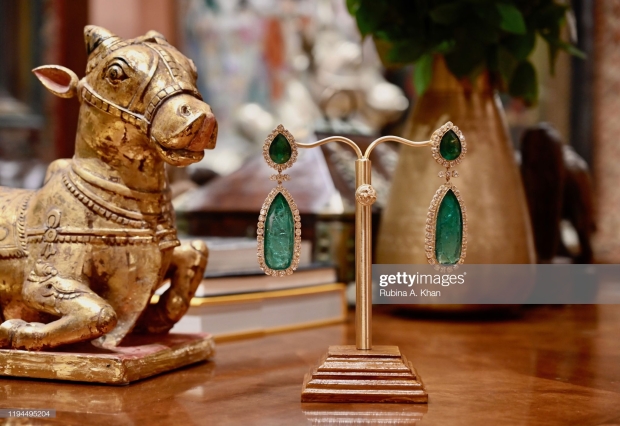
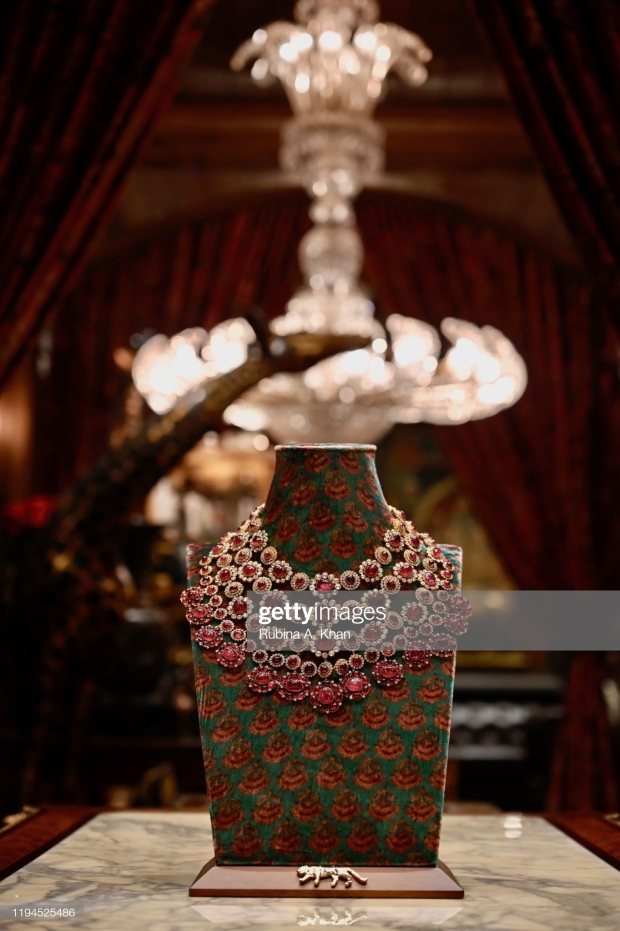
I love sapphires, yellow sapphires because old Indian jadau jewellery used to made with pukhraj, even white sapphires for that matter. I love rose cut diamonds – I love mutual cuts (old mine cuts) they are not brilliant cuts, so they have a little bit of softness and warmth in them – rounded and beautiful and soft. I don’t like jewellery with too much bling and shine as it takes the personality out of the jewellery. As us Indians have brown skin, I hate diamonds set in white gold because I think Indian people need warmth because it makes your face glow. When you wear diamonds set in white gold it makes your face ashen, but when you wear diamonds, actually mutual diamonds, which are slightly more softer, set in yellow gold, not rose gold… it just gives you that old world, rounded beauty. I think the problem with jewellery and stones in India is that people just want to blindly ape a tradition that has been created by the West and they don’t really buy what looks good on them. So if you ask me, I prefer stones with warmth that’s why I like sapphires. I don’t like the rubies that you find in the market right now, because once you start liking Burmese rubies, not even pigeon blood, the pomegranate color with a slight brown tinge in it, it’s like having good wine. It’s a one-way education and once you get exposed to good things in life, there’s no turning back.
gettyimages-1194495289-2048x2048Do you sketch your pieces like your clothes?
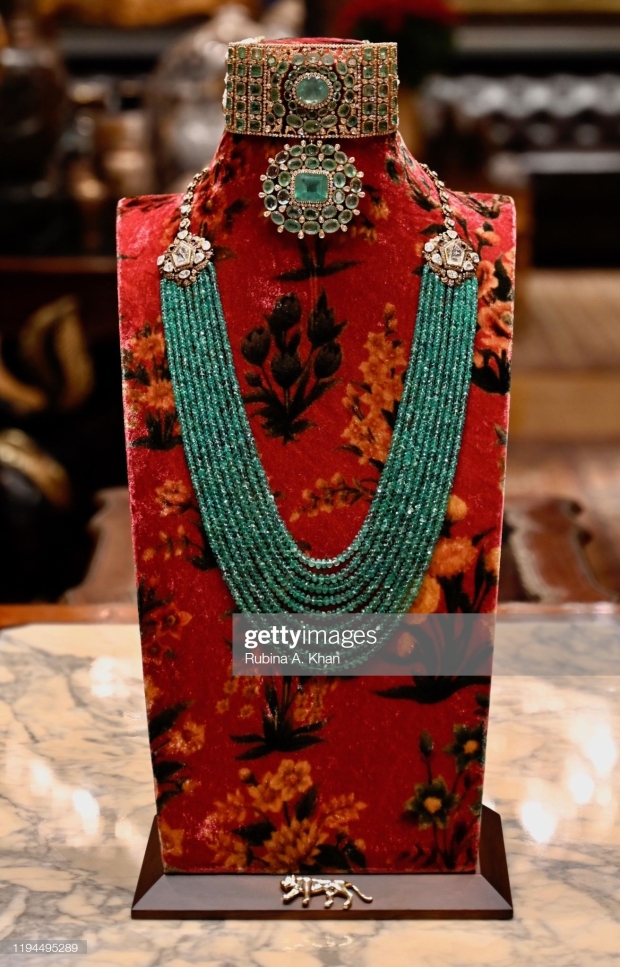
Absolutely. You can’t make mistakes with jewellery, but what I also do is that I keep my sketches in my jewellery very organic. A lot of jewellery is completely dependent on produce. When I make jewellery, I don’t assemble the piece till the last moment because there’s always a little tweaking, which I call the ‘Sabyasachi tweaking’ that I like to do. I’d love to combine emeralds which are expensive with aquamarines and turquoise, same color family, but with a huge difference in prices, or I’d like to put rock crystals and diamonds, which is a little unheard of, with white sapphires, all together because beautiful jewellery is also about audacity and courage. Otherwise you’re just one of the pack and that doesn’t interest me.

What is the most desirable piece of jewellery in the store? And what does this desirable piece of art sell at?
Desirable always doesn’t have to be very expensive. I am not a jewellery person – but it’s something that I would wear – it’s an old pendant, an old mutual cut diamond pendant with a single line of basra pearls and it’s not very expensive – it’s about INR 9.5 lakh, but it’s just so delicious and evolved. It’s like a character that comes without a pedigree, but someone that you’d love to marry and take back home because it’s just so special.
gettyimages-1194491248-2048x2048Are diamonds still a girl’s best friend?
Rubina, ask the ladies. Many of them tell me Sabya is a girl’s best friend.

How does it feel to be the biggest Indian designer brand, and perhaps the only one to succeed on the global playing field?
I don’t know if I am the most influential or the most popular, but I just know that I am onto something big in my life and I will work very hard till that dream comes true.

What would be the reason for you to seek outside investment in your company?
Strategy. I would never pick up investment for money because I think the business generates enough cash-flow for us to be able to fund ourselves for the next 20 years and grow. But, I am not going to be there forever, so I want to consolidate this business in such a way that it lives far beyond my lifetime. Nandana Sen had given me an issue of Vogue for my birthday, a 1920 issue I think… 150 odd pages and the only name I recognised in it was Tiffany and I realised that in 100 years, so many brands have come and gone, and I don’t want that to happen to my brand. I love the way Chanel has been built beyond Coco Chanel’s lifetime and I think that I’ll find my own Karl Lagerfeld along the way who’s going to take the business from me, to future generations.
gettyimages-1194478437-2048x2048You’ve reached a stage where your creativity is not dependent or driven by money anymore. So what makes you chase the next new collaboration or expand your revenues streams with your creative energies?
I want to grow the business in such a way that it can help consolidate craft and create a lot of employment, and also probably help communities and enable us make the world a better place to live in. The beautiful thing about being in design is the fact that you create tremendous positive inspiration for people; you create hope. Beautiful design makes people happy and there’s a big debate about whether so much is necessary or not, but I think as long as you can create a brand that inspires people to become better versions of themselves, you should keep growing and that’s how I want to grow Sabyasachi Calcutta.

You’re the dream couture designer, definitely in India. Having seen so many blushing brides and grooms, do you know what the color of love is? Or what it even feels like?
Well, they say that the color of love is Sabaysachi red but I am just being arrogant! But I’ll you, I am personally touched by love every day of my life because I am a very positive person. Love does not have to come from one person. It can come from everything that you touch and everything you do and everything that I imbibe around me. I am a very loved person is all I’ll say.
gettyimages-1194480317-2048x2048Would you describe yourself as a ruthless businessman who loves the arts but is uninhibited and unabashed about stating and claiming his creative price?
I don’t know if I would call myself ruthless, but I would probably call myself exacting. And when you call yourself exacting, a lot of people label you ruthless. I wouldn’t have it any other way actually, because for me, if I have to do something I have to do it well or I wouldn’t do it at all. There’s no price to my creativity – I would do something for you if I was inspired enough to do it. Money is inconsequential for me, but of course, the money that we charge, if it helps us create something that can build a larger community or create bigger businesses that employ more and more people, it’s very exciting. For a lot of people who think that because I make such lavish clothing and jewels, truth be told, I wear a lot of simple clothes. Money is just a number for me and it feels great to make money, because in many ways it is a marker of success. But I don’t do things for money. I do things for growth – tangible and intangible. And intangible growth is far more important to me.
gettyimages-1194477822-2048x2048Given your heart and soul are not for sale by what you just said, what would you sell your brain for?
I’d sell my brain for a minority stake at Apple or a majority stake at Amazon!

Disclaimer: Any part of the content on the rubinaakhan.com website cannot be reproduced without prior permission and crediting the website and the author.

©Rubina A Khan 2019

Indian Real Estate Has A Toxic Problem | Gulf News

The cardinal constituent in realty is location and it has been dictating the price index and value of developments, with unmatched absoluteness. But that seems to be going up in the air now, quite literally, in India. The hazardous concentrations of particulate pollution that engulfed Mumbai in November this year, measured a PM 2.5 of 320. But Delhi witnessed a PM 2.5 of above 900, that was way beyond the maximum of 500 and went into “extreme mode” terrain, compelling the government to declare a public health emergency in the capital.

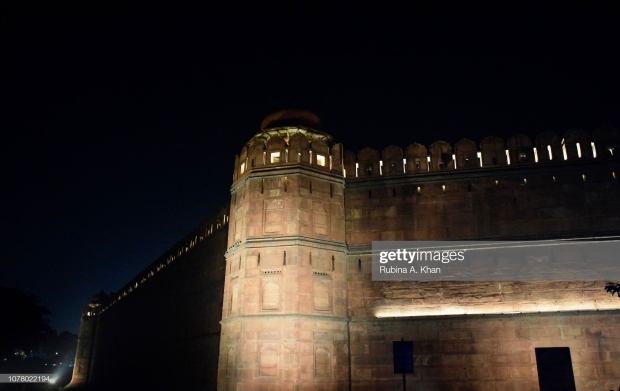
gettyimages-1078022194-2048x2048

Red Fort in New Delhi | Photo by Rubina A. Khan/Getty Images

When inhaled, PM 2.5 affects the human body’s natural defence, going deep into the lungs and even the bloodstream, causing serious health disorders like asthma and increasing the risk of heart attacks and strokes. Clean air and water is a constitutional human right, but that right seems to have been drowned out by the drilling drone of the innumerable developments and their construction dust, vehicle exhaust and industrial emissions that make up the toxicity in the air. State governments ignoring the Supreme Court’s orders to limit agricultural burning isn’t helping either, endangering human lives even further.

Air quality is the new “prime location” and health is the new “amenity” that people are starting to look at when it comes to real estate today, not just an exclusive address or city. It is their lives at stake after all. ‘What good is buying a home in an elite neighbourhood in a metropolis that will leave you breathless’ is the common refrain in India since. The address people choose to buy in, or rent in, needs to be healthy and fit for human living, and conducive to their mental health and overall well-being, not herald a life ahead with disease and hospital bills. Sustainable is the word of 2019 – forget the fashion industry being the biggest pollutant globally – it has come down to sustaining human life in India in 2020 with fresh air and water and taking measures to rein it in. Instead of developers selling spaces highlighting the ‘heart’ of a city, it’s time they advertised the ‘lungs’ of a city to get people to buy.

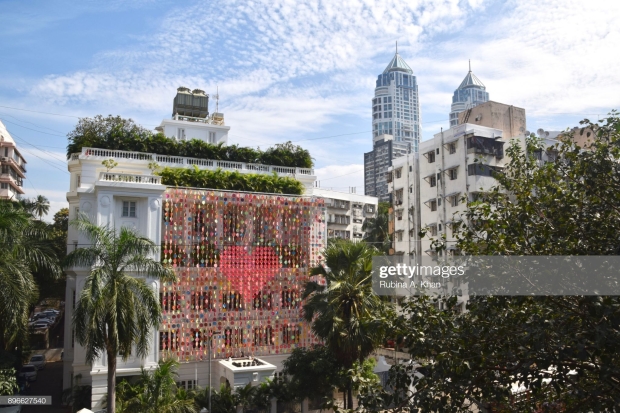
gettyimages-896627540-2048x2048

Peddar Road in Mumbai | Photo by Rubina A. Khan/ Getty Images

Newer realty developments are definitely hit with the unprecedented pollution levels in Delhi, and it will be a detriment going forward in 2020 for buys in the capital. Mumbai is not far behind either. Unless of course, the deals are lucratively priced to lure people in, with the promise of fresh air and improved Air Quality Index by the government. Non-Resident-Indians have a choice to wait it out and not invest in India till the air clears up, especially the ones living in the United States, that has some of the cleanest air in the world, but do resident Indians have a choice? Not really, barring buying homes in Goa and Rishikesh and that is quite indicative of the buying trend in 2020 for resident Indians.

Indian realty is obviously unprepared for the AQI factor that will very soon be a dominant determiner for property buys and sells in the country. After all the regulatory laws that shook up the business since 2016, this is another deterrent for the sector, especially with the large unsold inventories in the country. A war on pollution needs to commence in India now to accord  its taxpaying citizens a basic human right to breathe clean air and stay healthy.

gettyimages-482330924-2048x2048

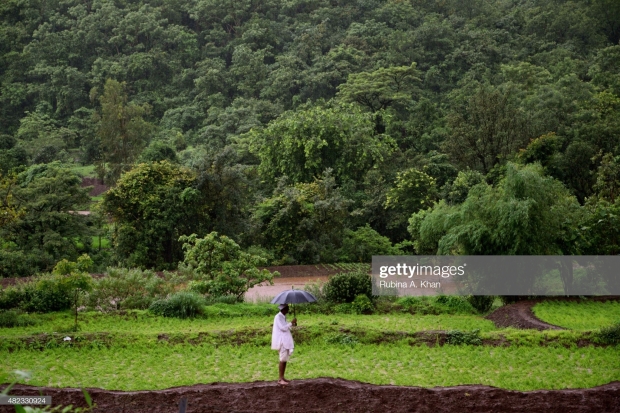
Lonavla | Photo by Rubina A. Khan/ Getty Images

2019 saw the introduction of the Model Tenancy Act 2019 as part of the first budget of the second term of the Narendra Modi government. Like its earlier reformist counterpart, RERA, introduced in 2016, the Model Tenancy Act 2019 too reads great on paper, but has yet to step up on accelerating the implementation of the same. I see an Air Quality Act being passed in 2020 but then again, it’s the implementation of it that looks hazy, just like the Mumbai and Delhi skies right now.  

This feature first appeared in Gulf News on December 13, 2019

Thank you AD Kilachand and Bina Ramani for your time and thoughts. 

©Rubina A Khan 2019

RUBINA’S RADAR | INDIAN FASHION’S NEW CURRENCY – COUTURE CARATS

This month has been rather august for Sabyasachi with his jewellery line pulling in some colossal coin for the fashion house. And, I am not using the word ‘colossal’ airily here. An exhibition of heritage and fine jewellery by Sabyasachi, comprising of gold, uncut and fine diamonds and coloured stones was held at the Taj Mahal Palace hotel (a favourite Taj of mine!) in Mumbai on the 13th & 14th of August, 2019. Over the two day exhibit, the jewellery sales brought in an unexpected and staggering double digits for the label. “We had good sales at the jewellery exhibit, but it’s not dignified for us to flaunt figures and it’s not a good business practice either,” says Sabyasachi.

Ever since he launched his jewellery line, it has compelled every fashion designer in India to view diamonds and precious stones with a design perspective, never mind the naysaying and economic slowdown whinging all around. Sabyasachi brides and grooms now have the added luxury of getting their bridal dreams realised in totality, in both fabric and stones, at any one of his flagship stores across India. And with the high numbers that the Mumbai jewellery exhibit brought in, it goes without saying that Sabyasachi definitely knows how to pull his weight not just in khadi and chiffons, but in molten gold and diamonds too! And his loyalists are only queuing up for more.

Screen Shot 2019-08-25 at 7.07.37 PM

©Sabyasachi Heritage Jewellery  

Emboldened by the response to his private jewellery viewings over the past two years and the multiple city exhibits across India this year, the couturier is now ready to open his first jewellery store, situated on the third level of his flagship store in Kala Ghoda in the festive quarter of 2019 in Mumbai. If the bejewelled whispers are anything to go by, the store will be a blinding sight to behold.

Manish Malhotra, fresh off Maahrumysha, a shimmering velveteen of an alluring show, that kicked off Lakme Fashion Week’s Winter/Festive 2019 edition, is launching his new jewellery line this year. Malhotra’s show on August 20th at Famous Studios, Mumbai had models wearing Raniwala 1181 jewels on the runway, including his showstopper, actor Katrina Kaif, and some of his favoured Bollywood front row regulars and social lights. It was a lucent teaser of what is to come from his jewellery design board.

Screen Shot 2019-08-25 at 8.29.34 PM

©Katrina Kaif in Manish Malhotra’s Maahrumysha line

“I have been carrying a Raniwala 1881 line, curated by me, in my Mumbai store since August 3rd, 2019, with some pieces at the Delhi store. But our next collection together will be the one I am designing for them. I chose to collaborate with Raniwala 1881 as they have years of expertise behind them, making genuine, good quality jewels,” says Malhotra of his upcoming jewellery line that will be available come November 2019.

Not one to conform to perform, Tarun Tahiliani is not launching an eponymous jewellery line this season, but he intends to. Having had a peripheral jewellery collection in the past, not a full-fledged one per se, he is serious about launching one going forward.

823251160

Tarun Tahiliani’s Tarakanna couture collection | Photo: Rubina A Khan

“I am always wary of selling things that I can’t verify unless there is a buyback guarantee. I’ve heard too many horror stories of people who are buying things that are not what they claim to be. The problem lies in the quality of coloured stones and heating versus natural and the like. So I approached the World Gold Council as they took the guarantee, and they also have a buyback guarantee with the person I dabble and work with. Only if the World Gold Council and the Gold Standard have certified something, will I lend my name to it. My reputation and brand integrity are of paramount importance to me and if I don’t have the necessary tools to verify something, I don’t want to sell it bearing my name,” says Tahiliani.

As far as jewellery lines go, not surprisingly, Rohit Bal has been there and done that. “I’ve done a jewellery line before, though it wasn’t an entire collection. And I am not saying no to launching one either in the coming months,” says Bal of a possible jewellery collection.

RB

A model in Rohit Bal couture | Photo: Rubina A Khan

Given that India’s biggest couturiers have successfully launched their own jewellery collections, or are planning to soon, it won’t be long before every designer in the country will be selling a bridal outfit, replete with its own essential accoutrements in couture carats. No doubt some of them will be decidedly questionable on the couture and carat fronts, but it definitely won’t be a deterrent for any designer aspiring to follow the successful business expansion models of India’s biggest couture houses in a bid to rise up in the fashion ranks.

Jewellery collaborations have always been a part of India’s bridal business, but couture carat collections seem to be the new fashion currency for Indian designers. In a business that is as plagiarised with a knock-off on every street as it is, designing couture carats is a fiscally viable way forward, complementing their couture collections. Couture and carats designed by your favourite designer is a win-win for everyone. Brides and grooms couldn’t ask for more now or could they?

Disclaimer: Any part of the content on the rubinaakhan.com website cannot be reproduced without prior permission and crediting the website and the author.

©Rubina A Khan 2019

India Gets An Updated Model Tenancy Act 2019 | Gulf News

India’s rental housing market, trammelled by archaic laws and ambiguity, is adapting to the pragmatic ameliorations outlined by Finance Minister Nirmala Sitharaman in her inaugural Union Budget 2019 speech. Sitharaman’s proposed regulations in the Indian realty market have since made way for the Model Tenancy Act 2019, drafted by the Ministry of Housing and Urban Affairs, that addresses the relationship between the lessor and lessee realistically and fairly.

The new tenancy law limits the security deposit to two months’ rent and lists heavy penalties for tenants overstaying and not adhering to the contractual terms of their rental agreements. An overstay will cost a tenant twice the rent for the first two months, that quadruples in the subsequent months. However, during such a period, the landlords are not allowed to cut off essential utilities like water and electricity. The Act also talks about creating special courts to deal with disputes between tenants and landlords and puts the obligation of carrying out repairs, maintenance and upkeep of the property like painting on the owner. While the landlord can’t increase the rent during the middle of the tenancy contract, the tenant can’t sublet the premises without prior consent of the owner. The Act aims to increase accountability in alignment with the government’s equitable development plans in the housing sector. The Centre has left it to the states to implement the Act or to amend it in accordance with their existing rental laws.

Mumbai | Rubina A Khan

Bandra-Worli Sea Link | Photo: Rubina A Khan

The Maharashtra government has decided to enact it for new constructions and introduce an amendment that protects properties governed by the Maharashtra Rent Control Act 1999. Landlords have domineered the rental business in India, and how, for far too long, especially in Mumbai, the only Indian city to feature in a top 20 list of expensive prime residential markets in the world recorded in Knight Frank’s Wealth Report 2019. In Mumbai, a real estate agent’s opening and closing has always been about what the owner wants, demands rather, barely skimming the surface of what a tenant wants, barring the monthly rent and astronomical security deposits. The broker is almost always submissive to an owner’s preferences, despite the tenant being as much a paying customer as the landlord. This parti pris dynamic needs to change along with the Act towards a balanced equation between tenants and landlords. Tenants need to rent and owners need their money – it’s a simple business deal and it’s about time it’s conducted like one.

The realty business in India is inescapably going to change with the Act, giving impetus to luxury rentals at the expense of buys. The biggest incentive in the rental sector is the security deposit being restricted to two months’ rent, allowing a tenant to utilise and invest the money for herself/himself, rather than blocking it with a landlord that earns interest off it. The Mumbai rental market stands to gain the most from the new Act.

Luxury rentals are far more fiscally appealing and viable with the new Act coming into play than ever before. The Act increases the confidence and security for both, landlords and tenants, getting into rental agreements aligned with the new norms, leaving minimum room for legal discord. Landlords will have to desist from imposing delusional demands on a tenant like sky-high security deposits and maintenance of the property and tenants will be legally bound to pay the weighty fines for overstay and misuse of a rented property.

This feature first appeared in Gulf News on August 3, 2019

©Rubina A Khan 2019

India’s Property Market Rides Election Wave | Gulf News

The triumphant win of Narendra Modi as Prime Minister of the Indian subcontinent for a second term, in the world’s largest election, has lent maximal credence to the country’s realty business in a manner most exceptional. The ruling government’s first term, contentiously driven by infrastructural development and financial realignments like Demonetization, RERA (Real Estate Regulation and Development Act) and GST (Goods & Service Tax) hit the cash-rich realty business particularly hard. Predictably, it was met with uproarious dissent. But, luxury realty seems to have taken a real turn since the legalized reorientations in the business, with antagonism giving way to smarts.

The luxe life is an addiction like no other. As long as there is human desire to live like royalty and be an in-your-face show-off, luxury real estate in India is headed forward. It stands at a profitable vantage point today, espousing all three acts, advantageous to both, builders and buyers. Indian realty expects investments to double to $10 billion in 2019. The paper trail and financial transparency accorded to the business is dominant, making it a streamlined, and somewhat trustworthy experience today. But there’s no denying that the business is devoid of the robustness and speed it once basked in, languishing ever so often in protracted sales.
gettyimages-520280970-2048x2048
RERA seems to have had the most impact so far, not so much on newer developers as it has on the bigger players with large, unsold inventories, given it is now mandatory for 70 percent of the money to be deposited in bank accounts through cheques, restricting unaccounted money being flushed into the realty business. Aside from its financial transparency, a RERA requisite that’s very conducive to prospective buyers, is that builders are obliged to quote prices based on carpet area (inclusive of usable spaces like the kitchen and bathrooms) and not super built-up area. Having said that, RERA needs to hasten the pace, and frequency, in providing aggrieved buyers who need long overdue compensations from unscrupulous developers across India. The clean-up in the business has only just begun. It is anything but cleaned up, as far as realty racketeers are concerned, despite the new regulations and progressive revamps of archaic Indian property laws like Insolvency & Bankruptcy Code and the Benami Transactions (Prohibition) Act being in place. For the business to regain the implicit trust of consumers and hit immediate sale highs, compensating buyers for their losses is vital, and it should become a regular occurrence as compared to the rarity it is today.

Luxury residences and serviced luxury residences make for accelerated buys and sells in India, and rightly so, as time is a luxury the wealthy can’t afford to indulge in. Newer developers in Mumbai like Aditya Kilachand, Partner at Innovation Estates LLP, seem to be on the right beach of luxury realty, building villas by the sea in Alibag, a mere three-hour drive from Mumbai. Tapping into Alibag’s infrastructure, the improved connectivity and proximity to Mumbai, its existing community and fairly undervalued land prices is just realty forethought and judiciousness. Seven luxury serviced villas called L’Hermitage, custom-designed by Sussanne Khan of The Charcoal Project, will be ready for some serious selling upwards of 10CR by Sotheby’s International Realty India, come July 2019.
villWith all the luxury constructions and developments, there is a new shift in the market of late, that of “aspirational luxury” residences that aren’t remotely luxurious, barring their price points. Priced at 7CR upwards for a 3BHK in the business suburb of the Bandra Kurla Complex in Mumbai, these residences allude to a luxurious lifestyle with cleverly scripted and assertive marketing hype. The insides of these residential towers are at most basic, with a garden path, a swimming pool and some semblance of a gym thrown in, with views of the city’s under-construction skyline off a balcony, masquerading as luxury amenities. Needless to add, it’s a “white elephant” investment for owners as resale inventory is at its lowest and unrealistic rentals dictated by the builder’s team, with few takers, stand testimony to the “mimic luxe” gimmick it’s established on. These kind of constructions need to be reined in, as these will lead to a catastrophically high, over-priced, unsold inventory in the country that will affect consumers far more than the builders.

This feature first appeared in Gulf News on June 9, 2019

©Rubina A Khan 2019

RUBINA’S RADAR | ISHA AMBANI PIRAMAL IS INDIA’S NEWEST FASHION FORCE IN THE MAKING

Fashion keeners are still effusing over Sabyasachi’s Kashgaar Bazaar runway presentation in collaboration with Christian Louboutin earlier this month. But more so, because they can’t have, rather can’t buy, what they saw! Sabyasachi’s stores in Kolkata, New Delhi, Hyderabad and Mumbai are inundated with requests from Sabyasachi enthusiasts everyday, for the beautiful Kashgaar Bazaar resort collection, only to be told that none of the 125 pieces shown on the runway will ever be made. Not even the green toga sari that Bollywood’s actor extraordinaire, Alia Bhatt wore to the show, or the bandhni lehenga (fresh off the runway) she wore soon after.

But guess whose natural beauty and poise, wearing a custom black sari made by Sabyasachi especially for the show, has been causing an anomalous fashion delirium since? None other than Mukesh and Nita Ambani’s daughter, Isha Ambani Piramal! Innumerable, not to mention persistent demands, are being made to the couturier for the black sari Isha had worn. “I do not do any merchandise change on client pressure. The black sari was always going to be a part of our production,” says Sabyasachi of the sari, that will soon retail a little over INR 1,00,000 for those desiring it. It sure ain’t easy overshadowing anything or anyone in Bollywood in India, particularly when it comes to fashion, but Isha seems to have done just that, by being herself. As I see it, Isha is India’s newest fashion force in the making. Black Sari Woman anyone?


Pinky Reddy hosted a celebratory lunch for her birthday on Saturday, April 20th, at Townhall, the latest restaurant on Mumbai’s ever-evolving culinary landscape for her friends in the city. Given Pinky’s convivial essence, it was an ebullient afternoon, well-attended by Mumbai’s beautiful women – Poonam Dhillon (who also had a birthday on the 18th) Rita Dhody, Poonam Bhagat, Rashmi Thackeray, Lali Dhawan, Laila Khan, Gayatri Oberoi, Madhoo Shah and Queenie Singh amongst many others.

The afternoon made me wonder if Cyndi Lauper’s classic track, Girls Just Wanna Have Fun, should be reprised, and swiftly, as Women Just Wanna Take Selfies! Pinky’s husband, Sanjay Reddy, vice-chairman of the GVK conglomerate, was seen, given he’s taller than Amitabh Bachchan standing at all of six feet and five inches, but barely heard. But he made sure everyone was well taken care of, in quintessential Reddy style, disarming smile et al. This is what a real marriage is all about, rare, but there.

Disclaimer: Any part of the content on the rubinaakhan.com website cannot be reproduced without prior permission and crediting the website and the author.

©Rubina A Khan 2019

RUBINA’S RADAR | A VERY FASHIONABLY YOURS APRIL

India’s couturier extraordinaire, Sabyasachi’s nonpareil fashion métier makes him an exalted being in the world of fashion. Today, the enviable designer ceases to be just about khaki, silks, embroidery, jewellery and his L’Oréal Paris x Sabyasachi Calcutta (a non-negotiable term when it came to his historic collaboration) makeup line. Sabyasachi Mukherjee, of the eponymous label Sabyasachi, is a vibe, and a very desired one at that.

From Bollywood actor Anushka Sharma and cricketer Virat Kohli’s wedding in Tuscany in 2017 to Deepika Padukone and Ranveer Singh’s ceremonies in Lake Como in 2018 to Priyanka Chopra and Nick Jonas’ coupling in Jodhpur in 2018 to the Ambani twins – Isha Ambani and Anand Piramal in Udaipur in 2018 to Akash Ambani and Shloka Mehta in Mumbai in 2019, the fashion artistry at all these extravagant weddings was designed and orchestrated by Sabyasachi. In a country where bridal wear, our equivalent of the West’s haute couture, is of supreme importance when it comes to the big spend, all these celebrated brides and grooms from diverse worlds of film, sport, music and business wanted Sabyasachi to “do” their clothes and jewellery on their big day. And that’s saying a lot because there certainly is no dearth of designers doing bridal collections in India. For someone who is on a no-sugar health plan, he sure is taking the biggest bite from giant wedding laddoos, India’s sweetest business!

Sabyasachi celebrates 20 years of his fashion story this year, with Kashgaar Bazaar – a runway presentation, in collaboration with the world’s most famous red-soled cobbler, Christian Louboutin on April 6th in Mumbai. The fashion extravaganza has international guests flying down especially for it and it’s already blowing up everyone’s minds with expectations of Sabyasachi’s grandiloquent style. Mumbai’s temperatures are soaring, but the anticipation of what Sabyasachi’s bringing to the city in April is taking it to another level of fashion heat!

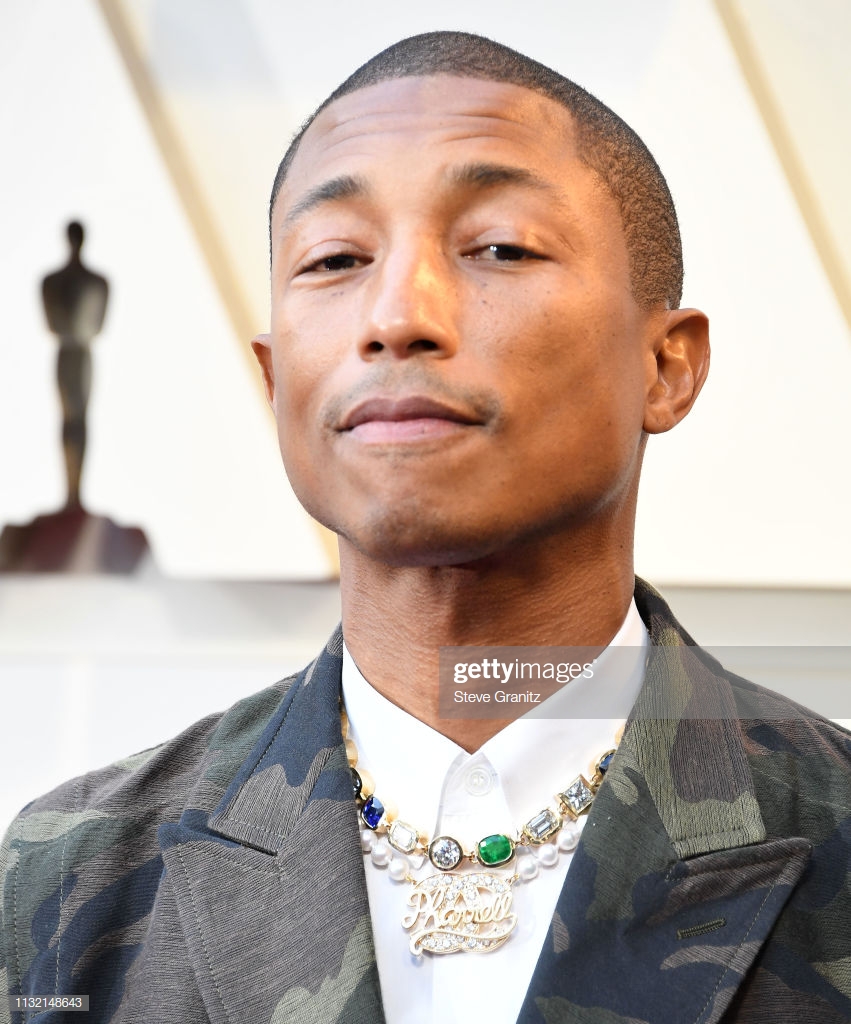
Pharrell Williams makes the world a very happy place with his music, but he wants to make it happier with his fashion and design aesthete with a colourful collection for Parisian fashion house, Chanel. Williams is the first ever guest designer for the fashion house, having collaborated on it with the late Karl Lagerfeld, Chanel’s creative director for 36 years. It was Lagerfeld who named the collection Chanel Pharrell.

To coincide with the launch at Chanel’s flagship in Seoul, Korea on Friday, March 29, the Grammy winning artiste released a behind-the-scenes video of the collection. In it, the multihyphenate talks about gender-fluidity, meeting Karl Lagerfeld and the importance and influence of the number 5 in the collection as well as Akira and motorcycle gangs.

Yellow bathrobes, brightly-colored hoodies and embroidered graffiti sweatshirts, terry-cloth bucket hats, sunglasses, T-shirts, opulent diamond jewellery and the double C bags make up the Chanel Pharrell collection, dedicated to both men and women. And, sneakers with hand-drawn text and doodles, but of course, and loafers and sliders. After the Seoul launch, the complete Chanel Pharrell collection releases worldwide on April 4.

A very fashionably yours April indeed!

Disclaimer: Any part of the content on the rubinaakhan.com website cannot be reproduced without prior permission and crediting the website and the author.

©Rubina A Khan 2019

RUBINA’S RADAR | THEATRE & FASHION ROYALE

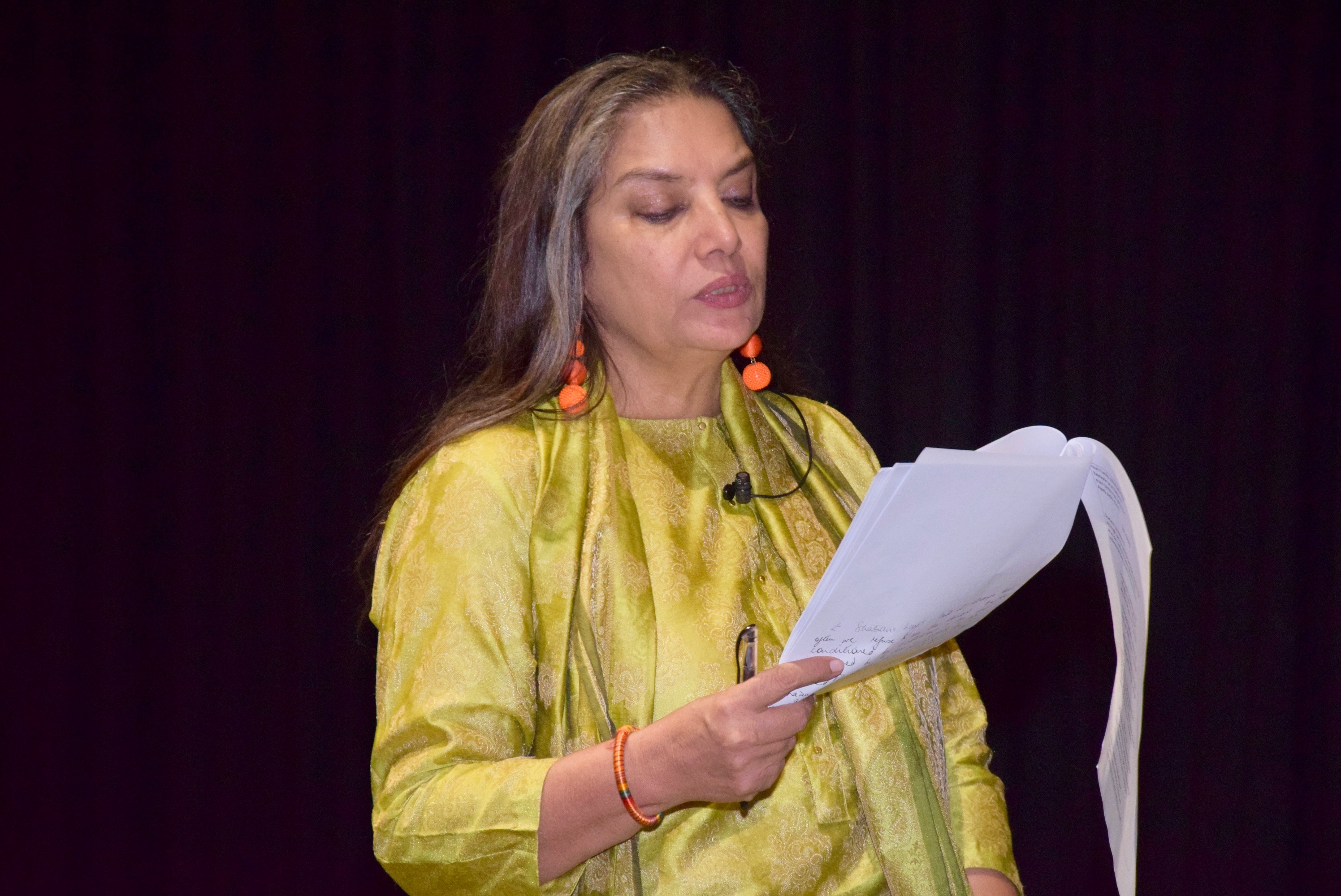
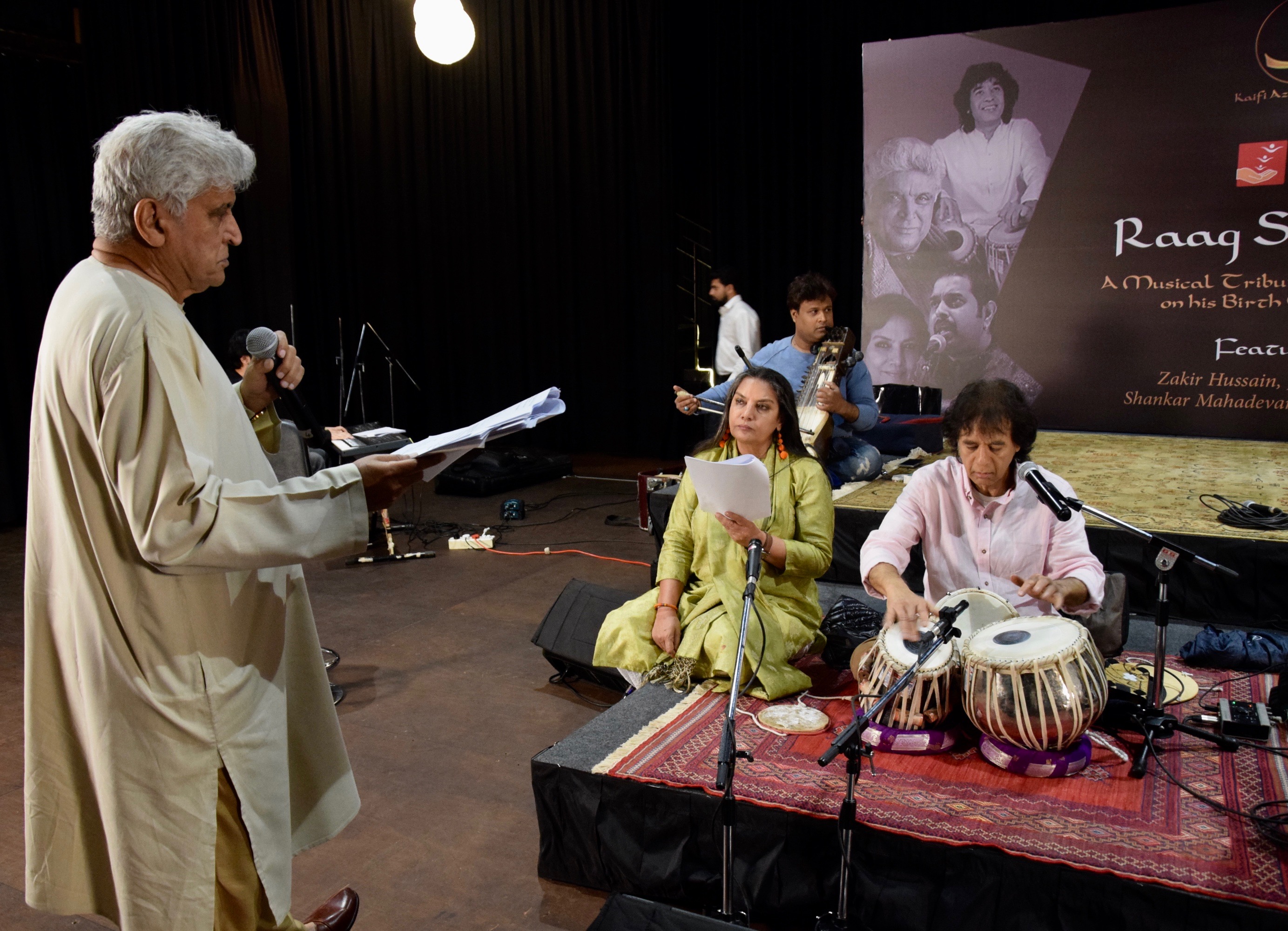
India’s finest talent, Shabana Azmi is celebrating her late father, Kaifi Azmi’s birth centenary with an ongoing series of events across India, from mushairas to plays to live musical evenings at Janki Kutir. Raag Shayari is an artistic, theatrical collaboration between Azmi, tabla maestro Zakir Hussain, singer and composer Shankar Mahadevan and lyricist Javed Akhtar, interpreting the works of the accomplished late poet in a contemporary, musical manner. “Raag Shayari’s an evening of archival value because Shankar Mahadevan sings a selection of Kaifi Azmi’s poems, Javed Akhtar recites them in Urdu and I recite the English translations with Ustad Zakir Hussain interpreting the same on the tabla,” says Azmi. The debut show of Raag Shayari was on January 13 at NCPA, Nariman Point. The second show was held the following evening at the St. Andrew’s auditorium in Bandra, Mumbai with Waheeda Rehman, Asha Parekh, Rekha, Aishwarya Rai-Bachchan, Vidya Balan, Farhan Akhtar, Divya Dutta and Madhu Chopra in attendance.

Shabana Azmi during rehearsals for Raag Shayari. Photo: Rubina A Khan
Javed Akhtar, Shabana Azmi and Zakir Hussain during rehearsals for Raag Shayari. Photo: Rubina A Khan

Forts are Indian fashion’s new runways du jour in 2019. Earlier this month, the Red Fort in New Delhi made for an enchanting setting for a fashion show held on its heritage grounds, organised by the Ministry of Textiles. It was a historic first for Indian fashion and a commendable one at that. After showing at the Red Fort, master couturier Rohit Bal enthralled Mumbai with Guldastah, a collection inspired by Renaissance artists and botanical paintings, at the Blender’s Pride Fashion Tour held at the Bandra Fort on Wednesday evening. 

Models walked down the bedecked steps of the fort in luxurious Bal raiments in hues of ivory, black, gold and red to the dulcet sounds of Shubha Mudgal’s live classical performance. This was the best fashion show I have ever seen in Mumbai. Guldastah was an immersive experience and you could almost smell the roses of forgotten romances with the ethereal floral dominance in Bal’s impassioned collection.

Actor Sidharth Malhotra was Bal’s showstopper, but a resident dog of Bandra Fort beat him to it, wagging its tail happily on to the runway, ahead of him, much to the delight of everyone present. Malhotra seemed to have studied Amitabh Bachchan’s walk and stance thoroughly and mirrored the same quite well on the runway. But then again, mirroring is not quite like owning it! Anju Bhavnani, now more popular as Deepika Padukone’s mother-in-law versus Ranveer Singh’s mother, was all praises for her beautiful bahu when I spoke to her for a lightning Mumbai minute. “We are very happy and blessed, hashtag blessed,” she said. A family that hashtags together stays together? Insta guess so!

Disclaimer: Any part of the content on the rubinaakhan.com website cannot be reproduced without prior permission and crediting the website and the author.

©Rubina A Khan 2019

RUBINA’S RADAR | BOLLYWOOD ACTORS DEEPIKA PADUKONE & RANVEER SINGH’S NOVEMBER WEDDING IN LAKE COMO

Bengaluru girl is marrying her Bandra lover boy for real. Bollywood actors Deepika Padukone and Ranveer Singh (Bhavnani) are getting married on November 14/15 in Lake Como, Italy. The couple announced the wedding dates, sans any other details, on instagram around 4pm on Sunday evening, sending the 42 million people following them, and more, into a ‘gramming, tweeting and whatsapping hysteria. Padukone and Singh have worked in three films together, all of which were directed by Sanjay Leela Bhansali – Goliyon Ki Raasleela Ram-Leela (2013) Bajirao Mastani (2015) and Padmaavat (2018) and have since become a haute favourite with audiences as a reel couple. Padukone, now an international actor having played the lead in xXx: Return of Xander Cage alongside Vin Diesel made it the 2018 Time 100 List as one of the 100 most influential people in the world and Singh is one of the highest paid actors in Bollywood and a hopping favourite with brands, both national and international. Their real life coupling as Mr and Mrs Bhavnani in November is only going to intensify their celluloid net worth. Together, they’ll make money move, and how! Congratulations you two!

Where there’s a wedding, there’s always jewellery in the known universe. And jewellery advisor Arundhati De-Sheth knows that and more. After graduating from the ESSEC Business School in Paris, Sheth was selected to the Louis Vuitton Moët Hennessy program to specialize in Luxury Brand Management, leading her to a working stint at Cartier Dubai. Mumbai-based Sheth pulls diamonds, rubies and emeralds from jewellers for a living, and loves it. Sheth, Mumbai’s first ever jewellery advisor, or perhaps India’s first, hosted a pop-up of jewels curated by her at Le Mill in the city recently. “I am very passionate about jewellery and the art of making it. In my role as a jewellery advisor, I work with a small group of handpicked jewellers from Mumbai that each specialise in diamonds, coloured gem stones and Jaipur jadau. I source jewellery from them on request, but I also approach other jewellers for a request that fits them. I’m not working with large brands at the moment, only private jewellers who work in a very organised and professional manner,” says Sheth of her distinctive job profile.

I think fashion stylists in India are so focused on pulling clothes for their celeb and bridal clientele that they never seem to get the accessories, or the jewellery accents right. It’s always too much or too little, never just right. Jewels can play up an ensemble majestically as can the most exquisite diamond look stunning on one individual and most unsightly on another. But then again, Sheth gets paid to tell you that as your personal jewellery advisor on call. The allure of beauteous, blinding bijoux is where Sheth steps in, nudging you towards bespoke sparkles befitting your persona, awakening your latent personal style in the process, all for a price of course.

Mumbai’s culinary landscape is as multifarious as it’s ad-interim. Relevance, consistency and popularity make for a rare threesome in the newly-opened bars and restaurants in the city. Kode, a freestyle bar and kitchen in Kamla Mills, Mumbai that opened in June 2017 is where it’s at with contemporary flavourful fare, theatrical cocktails, speak-easy design spread across 4000 square feet of industrial ground and Friday nights as a thumping lounge with a dance floor that 500 people shimmy and shake on.

The Burrata accompanied with a Tomato Foam, Melba Toast, Rocket Leaves and Balsamic Vinegar was great. The Turkish Flat Bread, Asparagus and Gruyere Quiche, Avocado Carpaccio with Crackling Spinach, Edamame and Tofu Thai Curry with Garlic Rice, Vietnamese Rice Paper Rolls, Beurre Blanc Chargrilled Prawns, Sweet Potato Crisps with a Green Pea Truffle Oil Dip make for my favourites from the expansive menu led by Chef Momin. And there’s still desserts and cocktails! The White Chocolate French Toast with Mango looks like a sunny-side up egg but it’s anything but, despite the mango “yolk” running over. It’s like a Westernised and very elegant Shahi-Tukda so to speak. Beloved by all, the Deconstructed Black Forest Cake with Maraschino Cherries is addictive. The theatrical presentation of the food and cocktails, like the cinnamon stick on fire in the Bird’s Nest Cranberry Passion Fruit Vodka Cocktail or the crushed rose petals that go into making the exquisite Forgotten Petal Sour Gin Cocktail replete with a Campari Soap, Australian Champagne Tea Foam and Cotton Candy or the White Chocolate French Toast, does not take away from their intrinsic flavours. It just adds to the drama and fun of drinking and eating out in a city that went from being a Bombay that never slept, to a Mumbai that sleeps way too early.

Disclaimer: Any part of the content on the rubinaakhan.com website cannot be reproduced without prior permission and crediting the website and the author.
©Rubina A Khan 2018

Indian Realty Adjusts To New Realities | Gulf News

Luxury realty is the obsessive reality of the moneyed order. Spending money is the only currency that fortifies the social standing of the affluent – both on the Forbes list and off it. Real estate buys and sells make for a fiscal haven in these propitious months of the Indian calendar, but this time around, there are no buyers. The Indian realty index is stable, but it doesn’t compare to what it was prior to demonetization. The immediacy in the market is non-existent but it remains a lucrative market for investors, expats in particular, after the sharp depreciation of the rupee. But time is the key component at play here. Buying property today equals buying time too as a vital appendage.
GULF NEWS COLUMNA luxury apartment in Mumbai valued at Rs70 million will sell, eventually, but time will play a starring role in the sale today. Slashed to Rs55 million at a sizeable paper loss to the owner, it’ll sell within six months to a year. Cutting losses on luxury property investments was unthinkable, the crash of 2008 notwithstanding. I wouldn’t call this a seller’s market – it’s the buyers that decide the when and the where, with no ready money in the market. Realty purchases are entirely need-based and not investment-based, barring corporates who have the money and readily-available loans to enable their investments. Individual investors shirk buying as that entails endless tax probes and exhausting paperwork.
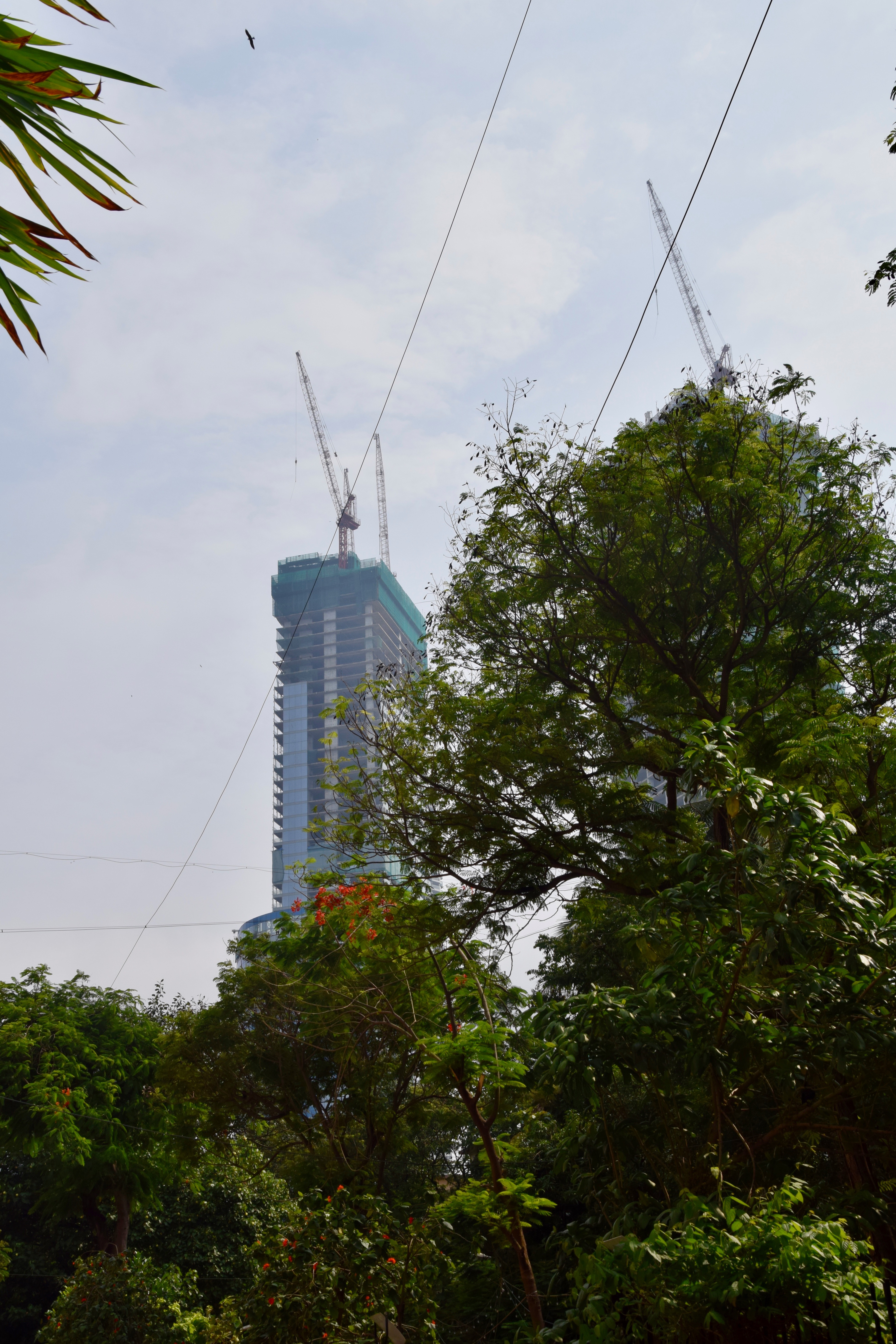
Realty projects are akin to a big Bollywood production that’s high on the collaborative trend today, making for sound business strategy, sharing profits and losses in the entertainment business. This seems to have found favour with realty developers too. But developers don’t really have a choice unlike Bollywood producers who can swing an independent film with Salman Khan playing the lead at whim. They’re compelled to co-build, sitting on overpriced plots that aren’t feasible to build on one’s own financial steam with the continued deceleration of money in the market. Few independent developers build in the luxury segment today. Co-building is a profitable proposition for developers but it makes it a larger liability for buyers to commit to new constructions.

DSC_6027

Under construction development in Mumbai | Photo: Rubina A Khan

India’s leaning more towards luxury rentals than luxury buys. Selling seems impossible. The return of investments on purchased property through leasing is abysmal, and not even marginally close to purchase costs. Reselling isn’t easy either. Future-forward individuals are now choosing to rent luxury homes with all the trappings versus buying. Fiscally, it’s more conducive to live the luxe life without a home owner’s liabilities. The freedom to shift in and out of cities, upsize and upgrade to glamorous homes and neighbourhoods when the mood strikes far outweighs setting up immoveable roots in one place – and all of it with clean bank transfers that comply with realty regulations.

Green is the new luxe word and agricultural neighborhoods is the trend du jour. India being an agrarian economy can take to agri-hoods swiftly, integrating agriculture into residential neighborhoods with working farms and green space. Agri-hoods suit the natural Indian landscape and will appeal to environment-conscious, rich millennials who are always seeking the “next level” in their lives. Living concepts of clean eating, organic produce, solar energy, climate change, rainwater harvesting and the great outdoors with fresh air are selling successfully through smart adverts worldwide. Under-construction properties advertise zealously with a definitive emphasis on green cover and integrating sustainable and organic food produce everyday – a miniscule attempt, but important nevertheless. Full-scale agri-hoods is the future of luxury realty and building agri-hoods will unify Indian community living.

DSC_6056

Under construction development in Mumbai | Photo: Rubina A Khan

Art that no longer hangs on a wall or is vulgarly placed in the middle of a room nor discussed in hushed tones, but tactile art is taking over luxury realty. Established and emerging artists are designing not just pieces of art, but entire residences, harmonizing their artistic voices with the distinct individualism of home owners. Fashion couturiers Rohit Bal and Tarun Tahiliani are both engaged in residential design, adding their genius to concrete. Fashion and art create a historical archive of the times we live in.

Architecture is almost incongruent to individualism with high-rises taking over Indian metros, cities and towns. But the highest honor in the architectural world – the Pritzker Architecture Prize Laureate – went to an Indian for the first time this year. Professor Balkrishna Doshi won the honor for his deeply personal and poetic architecture that touches lives of every socio-economic class across a broad spectrum of genres. If only the Indian realty business could turn a page as poetic as his works in its design ethos.

This feature first appeared in Gulf News on September 29, 2018

©Rubina A Khan 2018