RUBINA’S REVIEW | BANGKOK MARRIOTT HOTEL THE SURAWONGSE IS MODERN LUXURY WITH A THAI HEART

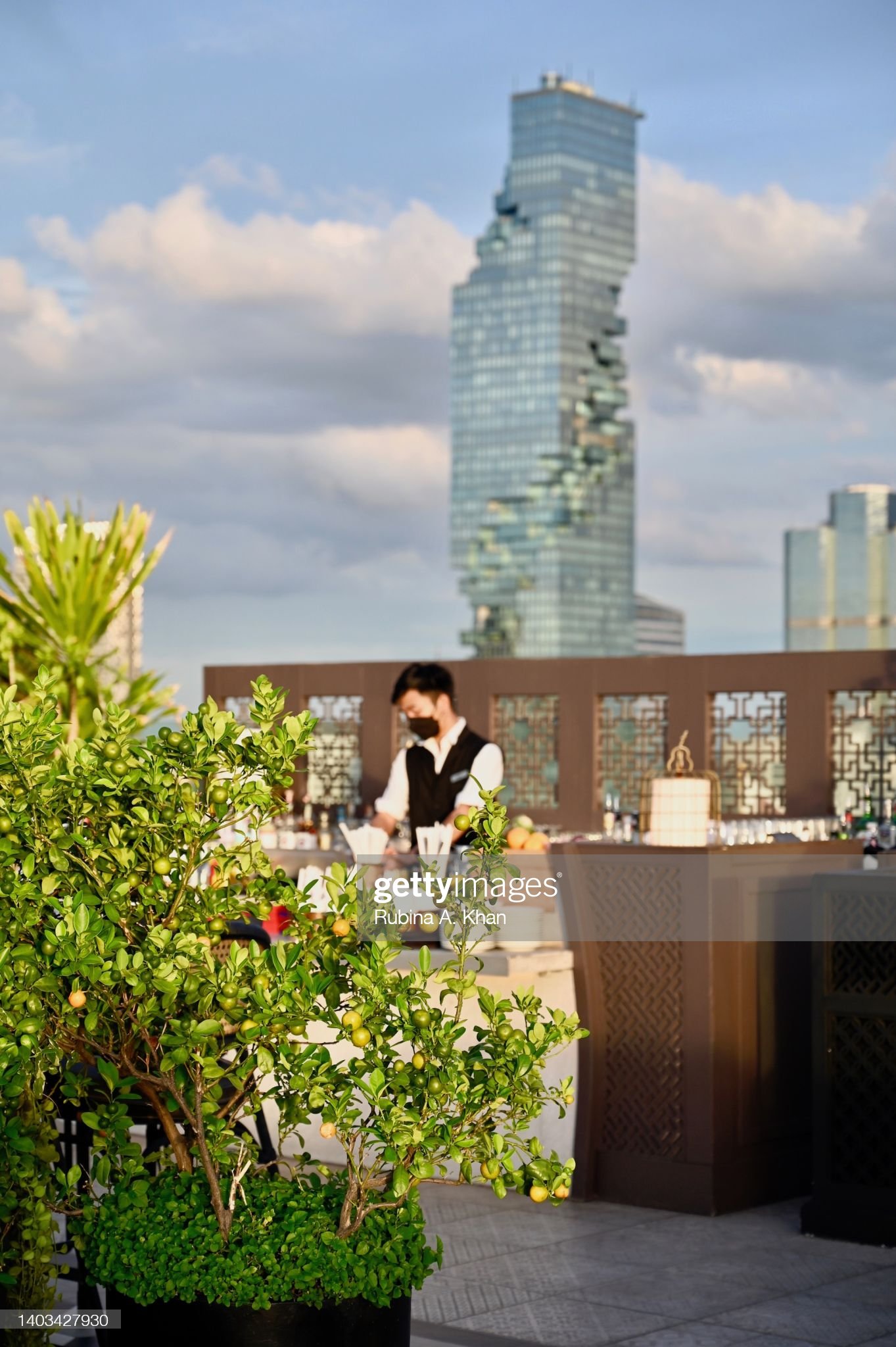
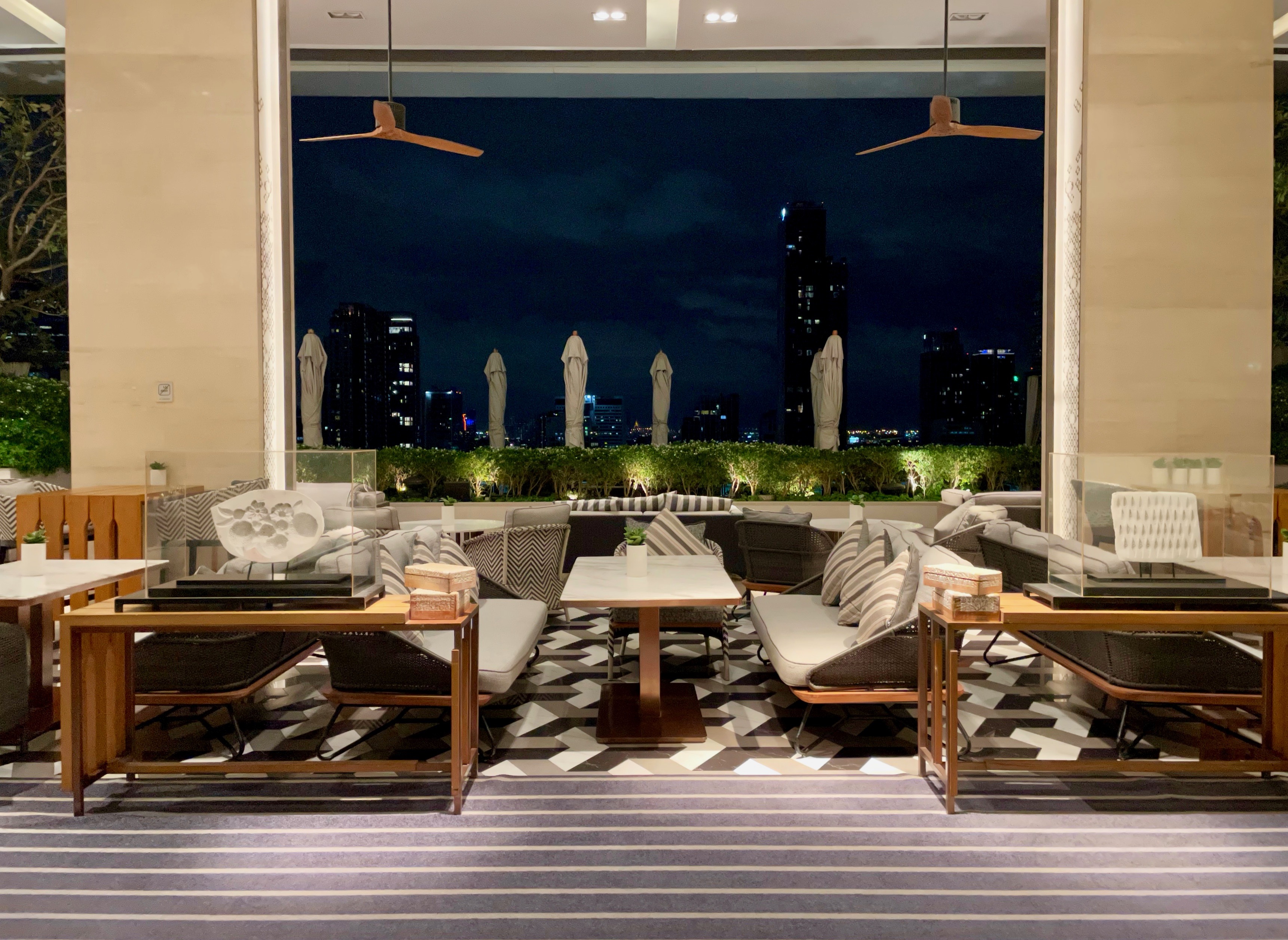
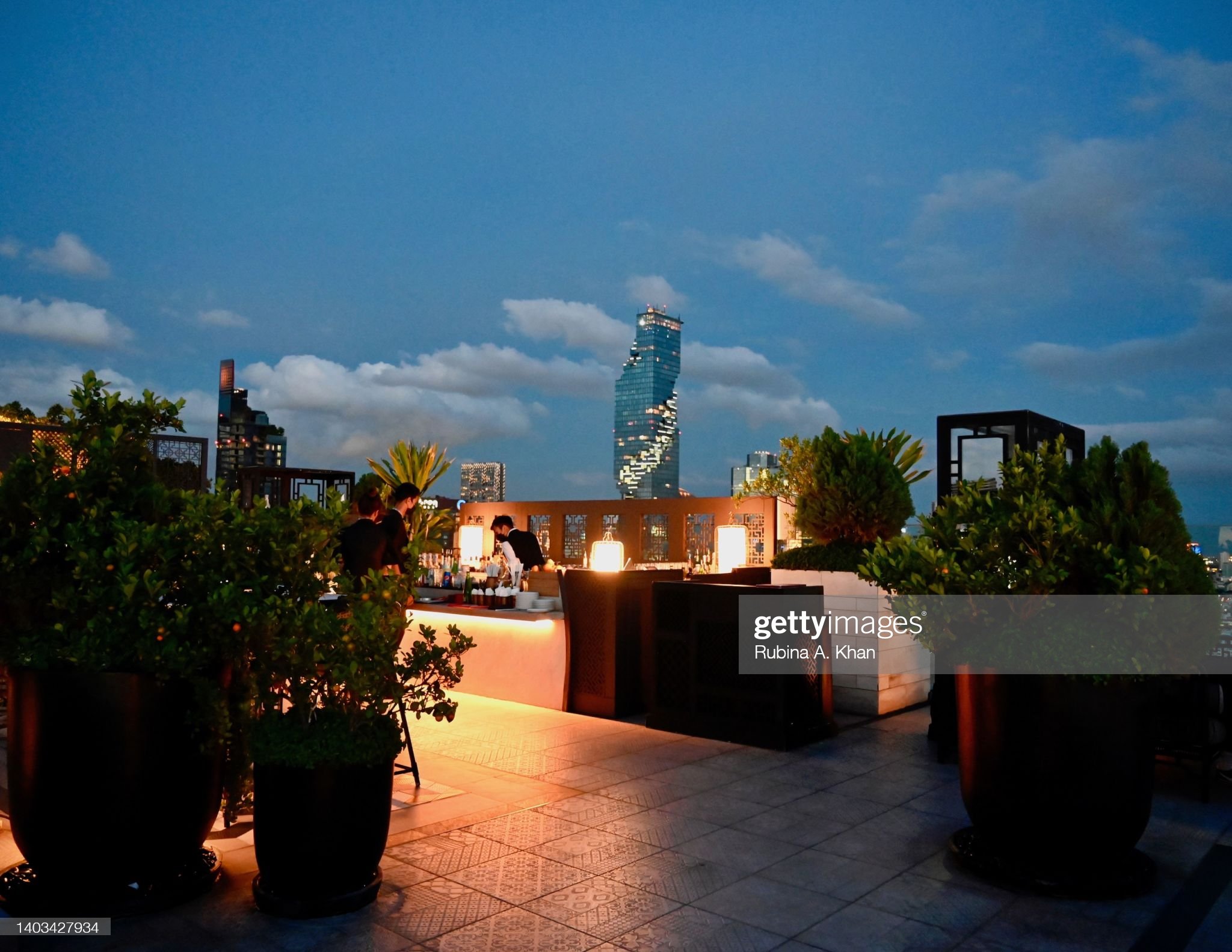
Night views of the city of Bangkok from the Yao Rooftop Bar at the Bangkok Marriott Hotel The Surawongse

The Bangkok Marriott Hotel The Surawongse on Thanon Surawong in the Bang Rak district of Bangkok opened in April 2018. Bang Rak is one of the fifty provinces (khet) of Bangkok, that lies on the eastern bank of the Chao Praya river, and it is rich in multicultural Thai history, with the British Club, the Neilson Hays Library and the mixed-use, pixelated skyscraper, the King Power Mahanakhon building in the area. The contemporary high-rise hotel, a 40-minute drive from Suvarnabhumi aiport, is the first Marriott hotel in Bangkok to offer a combination of 303 guest rooms, suites and residential suites from one to three bedrooms for short and long-term stays, making it a very popular choice for both leisure and business travellers, and as a wedding destination, given it won the International Hotel Award for the Best Wedding Venue for Thailand in 2020. The tree-lined, sun-dappled neighbourhood of Surawong equipoises vintage and contemporary Bangkok culture with a steady pace, with exciting stand-alone cafes, bars, restaurants, tailoring shops and foot spas that you can discover walking around, without the noise and traffic snarls of the very busy Sukhumvit, which I had experienced on my first trip to Bangkok on work, for a Bollywood film. I walked in the rain and a thunderstorm on my very first evening out in Bangkok their time around, not of my own volition of course, and drenched as I was, I still found the area of Surawong charming and beautiful.

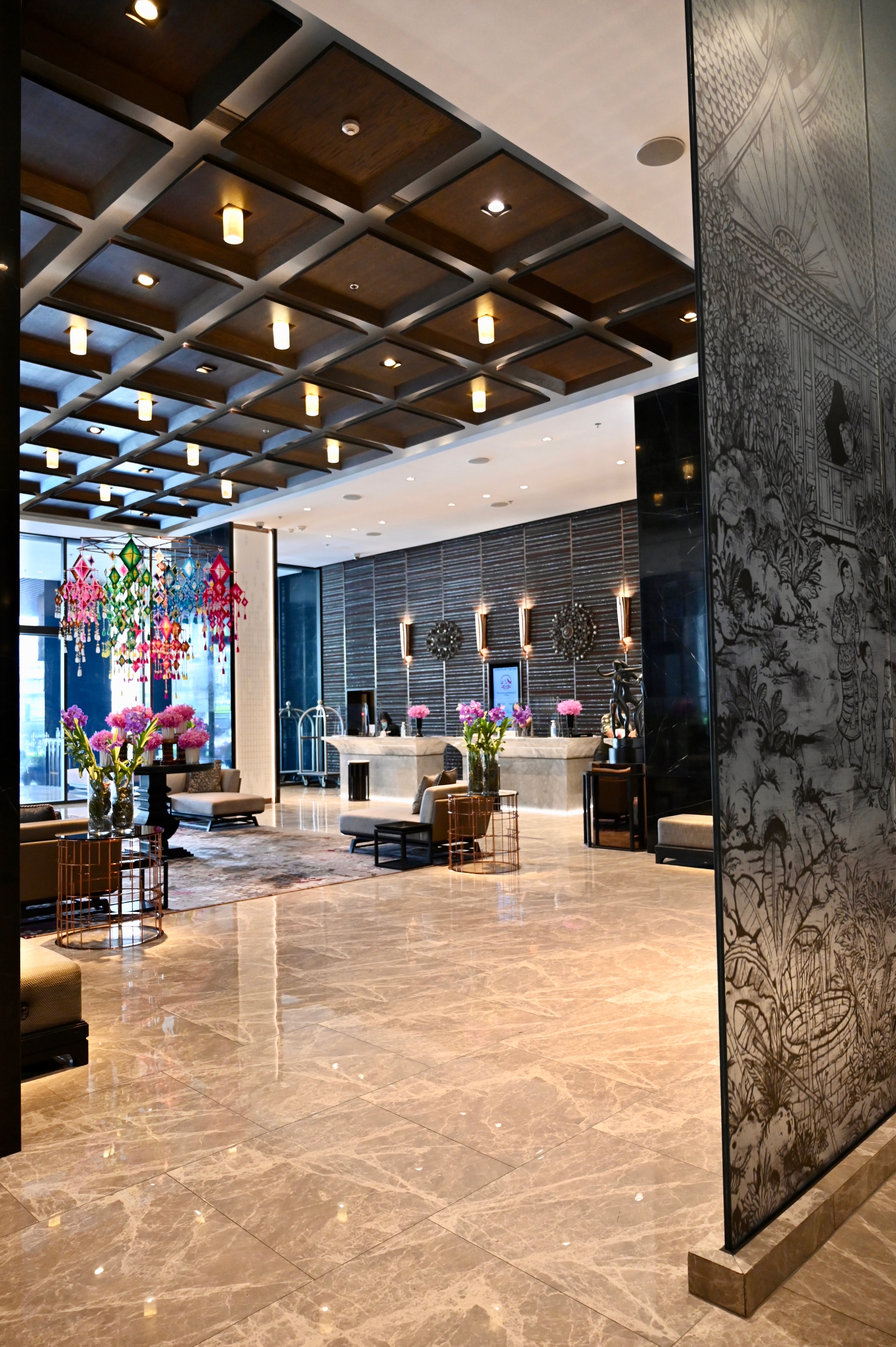
As you step inside the hotel, the most intoxicating aroma of fresh, Thai jasmine flowers embraces your person in the lobby – a beautiful way fo saying ‘Welcome to Thailand’ without any words. The check-in is seamless and very quick, as are the lifts and the speed of their wi-fi. The hotel’s design is modern, minimalistic and discreetly luxurious, with a hark back to traditional Thai culture in its hand-painted walls and glass murals of Thai country and court life in its design story. There’s a gallery in the lobby that displays authentic Thai hand crafts, alongside some beautiful bronze sculptures. Floor to celling windows in the rooms add length and breadth to them, as do the varied shades of grey furnishings and glass murals in the one bedroom residential suite, that also comes with a washer and dryer right by the entrance of the room. It is an important addition to the in-room amenities in the times we live in. The bathrooms are spacious, with rain showers, ensuite bath tubs and ample counter space. The housekeeping and hygiene standards of the hotel are faultlessly stellar and a top priority for them – the kitchen, living area, bedroom and bathroom looked as good as new every day of my stay and it was very impressive as cleanliness in a non-negotiable factor for me when booking a hotel. The one bedroom residential suite starts at THB 7886 per night including taxes, equivalent to INR 17,400 or USD 223 approximately. My room was a haven of peace and calm, where I could hear my own thoughts at my pace, through the blurred lines of reality, drinking my sweet Thai coffee with three shots of espresso – something I created to balance the dominant sweet flavour.

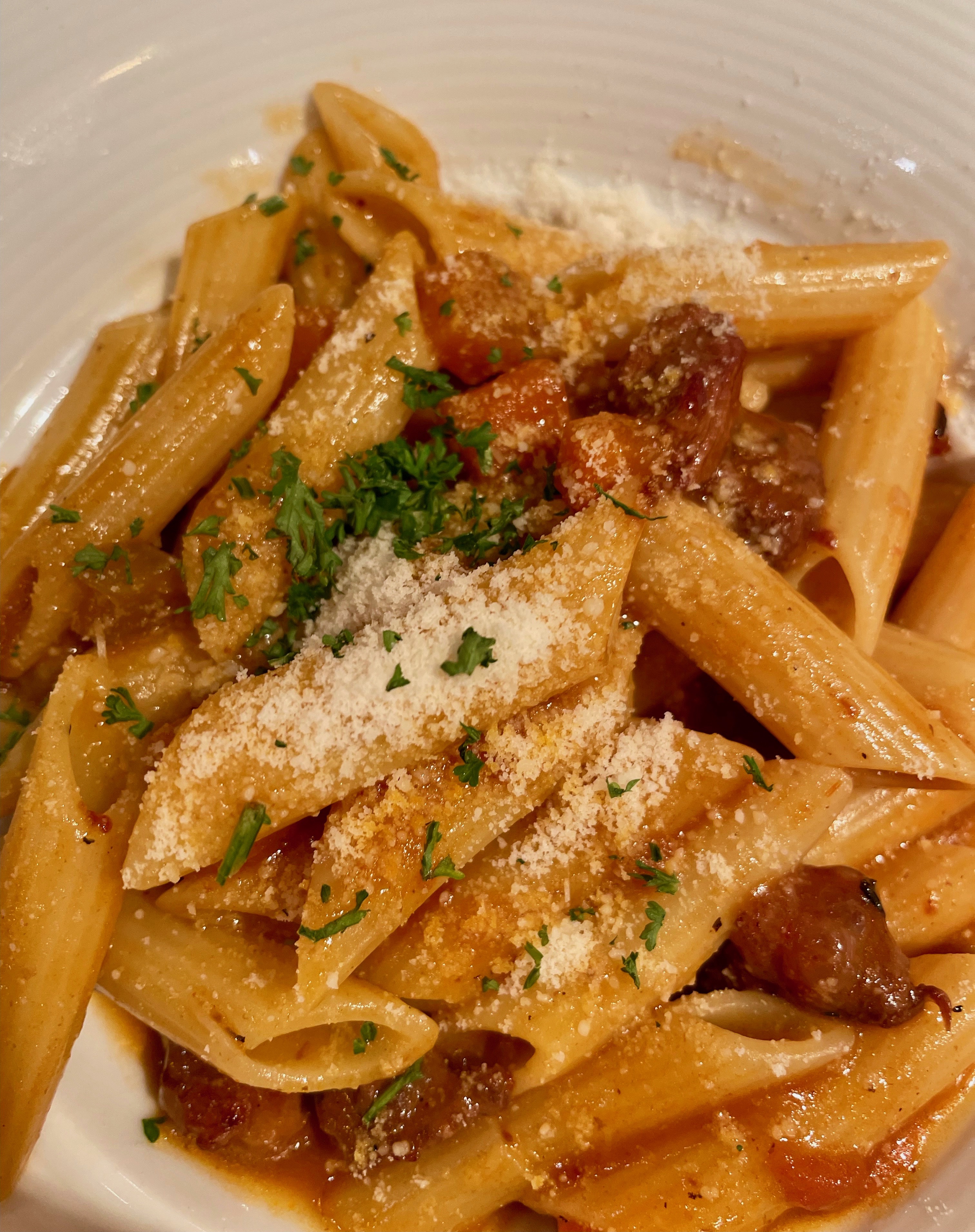
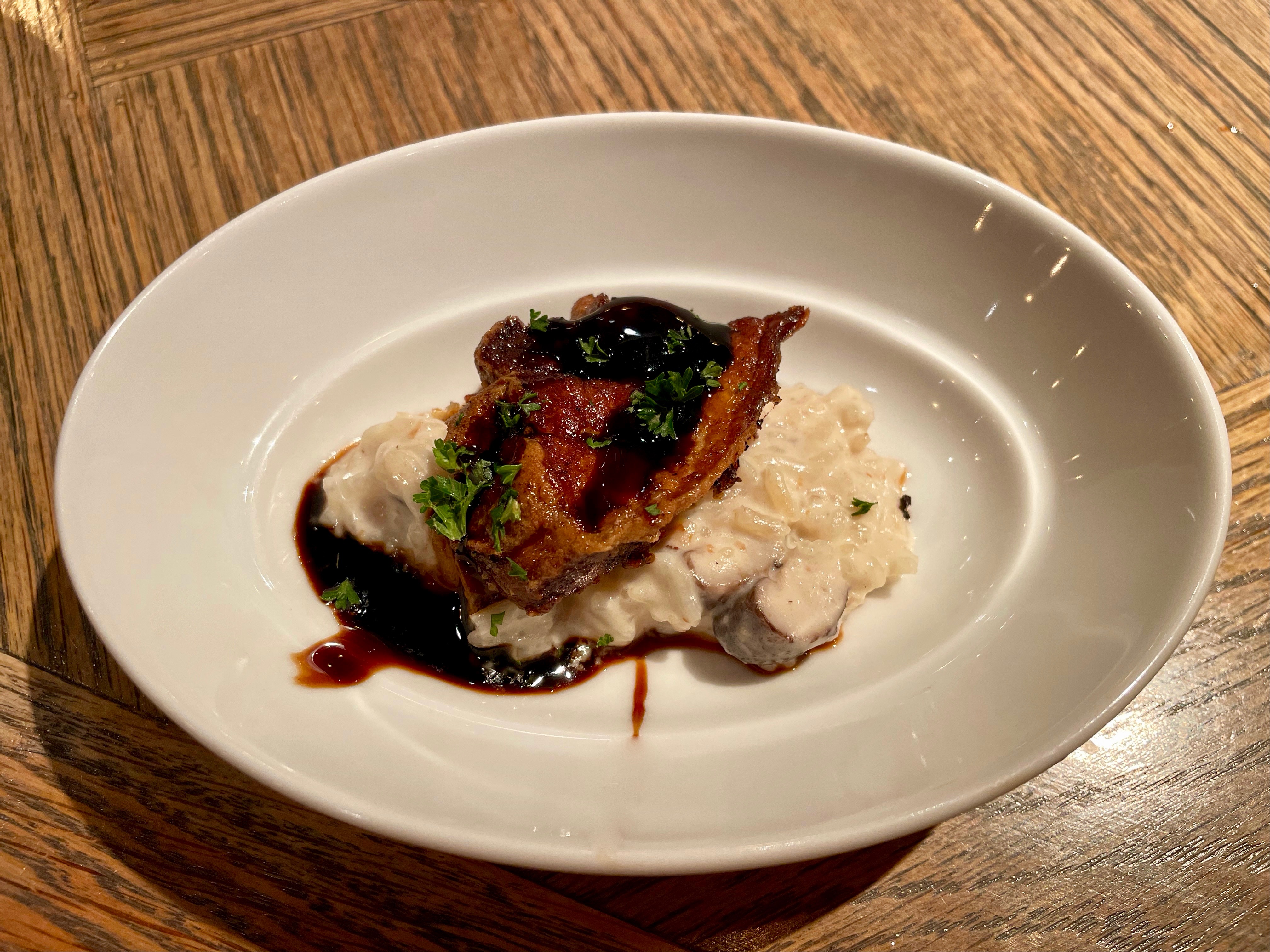
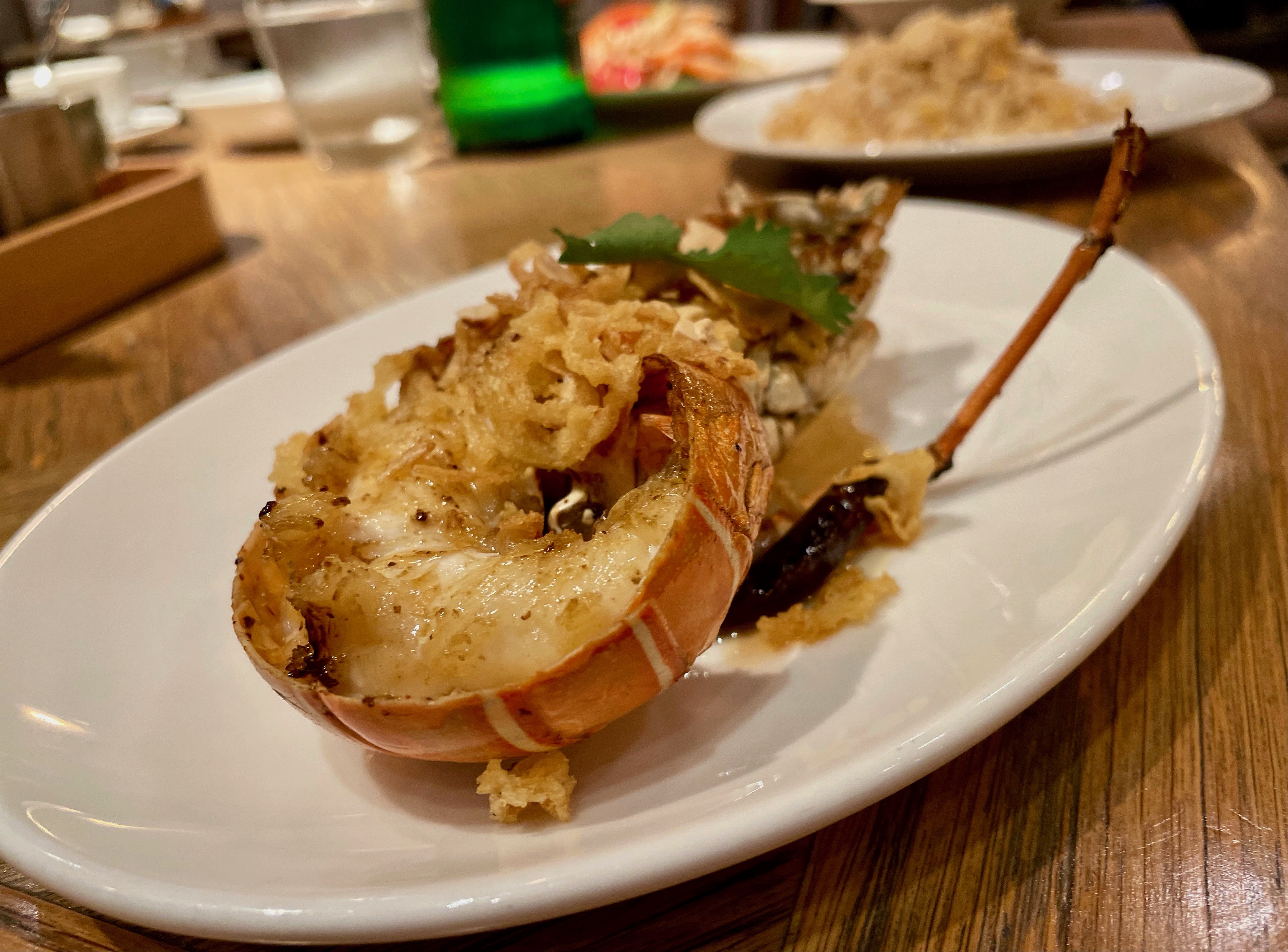
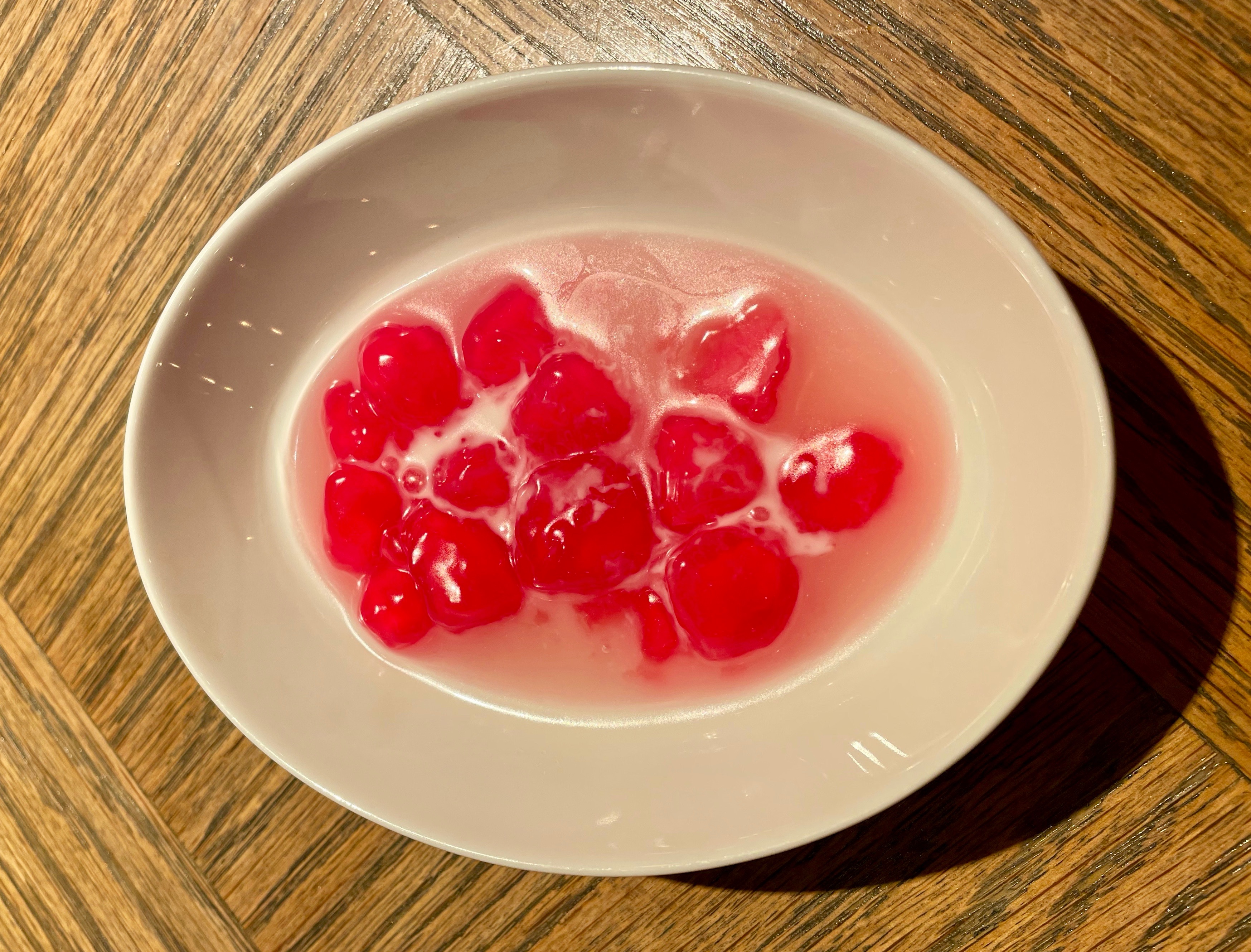
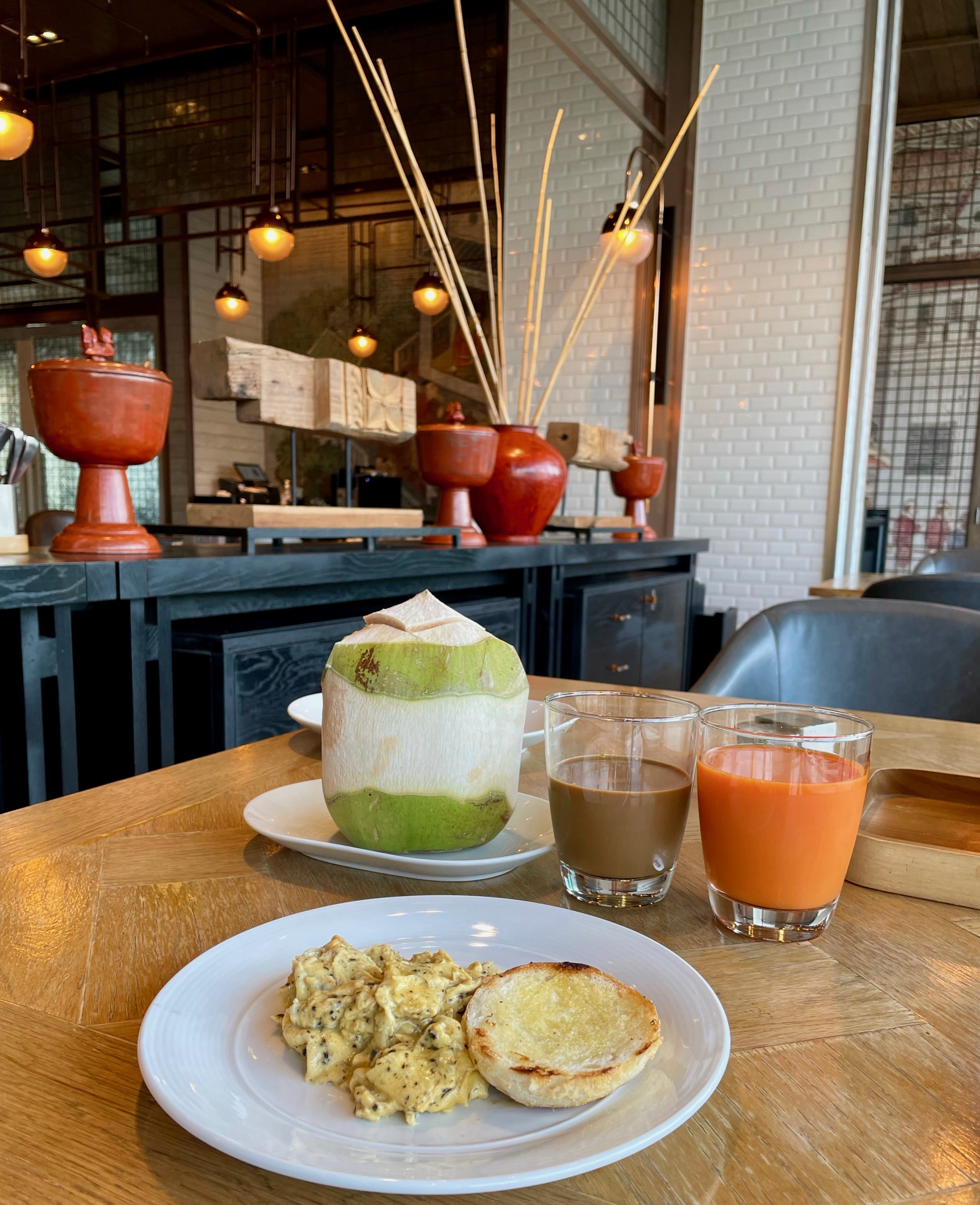
The breakfast at the Praya Kitchen is just the best, with every kind of food imaginable for a global palate. You can get in some cardio first thing in the morning just walking around the restaurant, getting your breakfast items, and there is nothing you could want at breakfast that they don’t have, including Indian. I used to look forward to going down to Praya on the third floor for breakfast every day. I loved their Truffle Scrambled Eggs, fresh coconut water, carrot juice and Thai milk coffee every morning. And I picked and grazed on other dishes. The soft and pillowy croissants were made from riceberry flour, a rice variety manmade in 2002 by the Rice Science Center at the Kasetsart University in Thailand, which is a cross breed of fragrant black rice and jasmine rice, resulting in a deep purple whole grain rice, also known as Forge Husband or Khao Leum Pua from the Tak province. Riceberry is rich in antioxidants, fibre and Omega 3 fats and is considered a Thai super grain. The Praya Kitchen’s buffet dinner, Thursday to Sunday, serves up delicious Thai street and Western food, from Som Tam salad, Yellow Thai curry with crabmeat, Pasta with Bamboo Shoot Beef Ragout, Ribeye Steak with Pepper Sauce, Beef Fried Rice in Chilli Oil, Goose liver foie gras to spicy Beef Chilly Thai style to fresh Phuket lobster and my favourite dessert, Tub Tim Grob. The Praya Kitchen is the busiest at breakfast and during the dinner buffet, but the attentive staff make it an absolute pleasure for every diner with their affable and responsive presence, every single time.
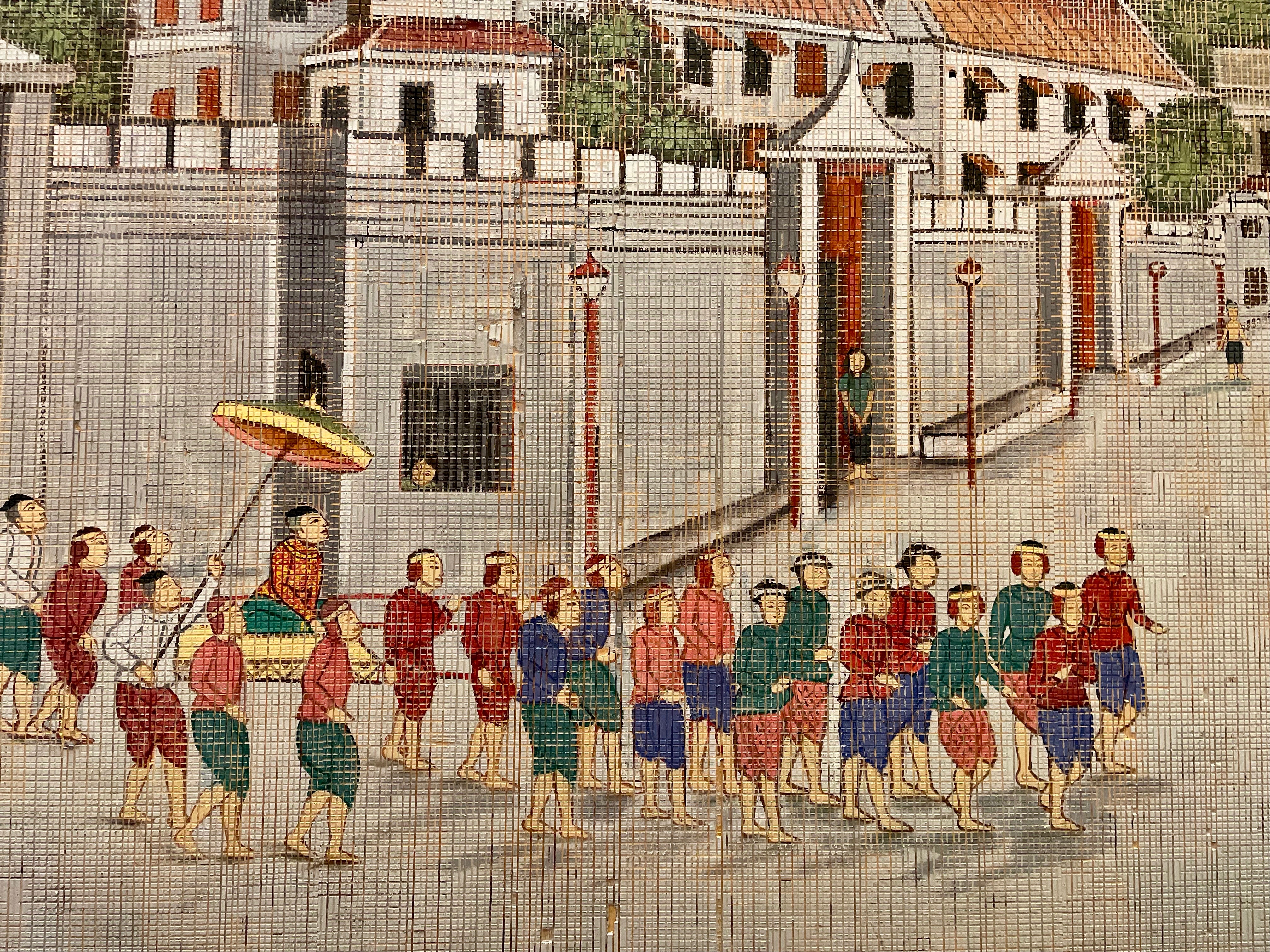
Hand-painted mural on the Praya Kitchen wall at the Bangkok Marriott Hotel The Surawongse

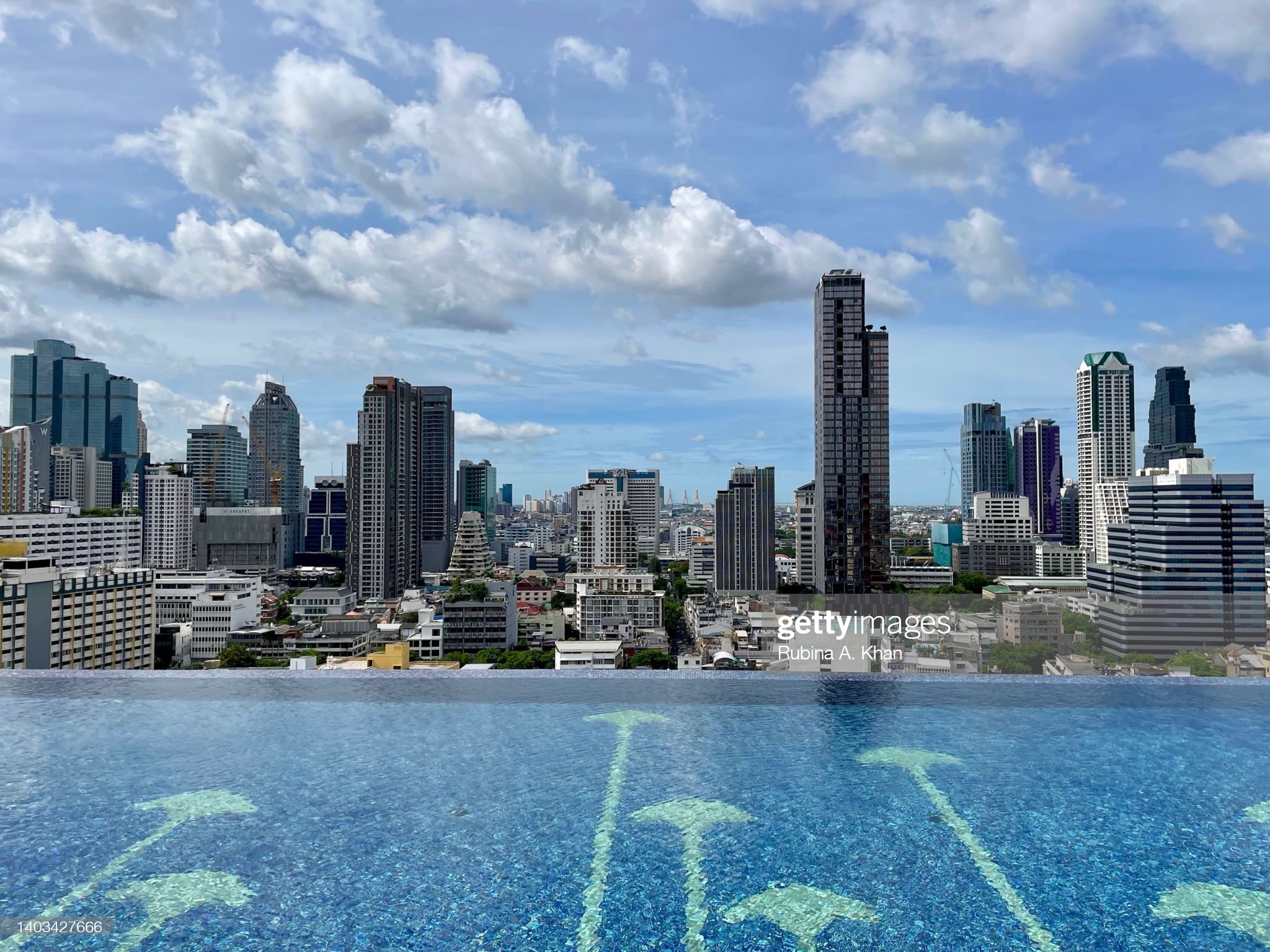
The Infinity Pool, a good size for a city hotel, is on the 18th floor, with stunning views of the city during the day and at night. The Quan Spa too is on the same floor, as is the 24-hour gym and the kids clubroom. I loved the Aroma Fusion treatment with Rose Oil (a very healing and therapeutic blend) and my therapist was incredible. Interestingly, the oils used for the Aroma Fusion treatment are decided by the time of day – so given my time was mid-afternoon, I was prescribed the Rose Oil. The Muay Thai treatment, very popular with Thai boxers, is their signature therapy, which I will definitely try the next time I am in Bangkok.
The striking King Power Mahanakhon building is a short 13-minute walk away from the Marriott Surawongse, where you can go up to the 76th floor in a lift that takes you there in 47 seconds, and then get on another hydraulic glass lift that takes you to the 78th floor where you can walk all over Bangkok, on a glass tray, 314 metres above ground. Walking on glass is not as easy as walking on the ground people, and if you’re afraid of heights or glass cracking under your feet, it’s a no-go. I walked, but barely! The views from up there are breathtaking and so worth the fear of walking on glass, a terrifying thrill to say the least! Interestingly, the Thai name for Bangkok, Krung Thep Maha Nakhon, is actually a short form of the capital’s full name, which is almost a sentence to describe the city than a name: Krung Thep Mahanakhon Amon Rattanakosin Mahinthara Ayuthaya Mahadilok Phop Noppharat Ratchathani Burirom Udomratchaniwet. The Grand Palace, Wat Pho and Wat Arun temples are 15-minute cab rides away from the hotel, as is the Iconsiam shopping mall, with queues outside the Louis Vuitton and Hermes stores. The hotel also runs a complimentary regular shuttle van service to Sala Daeng BTS skytrain station for its guests. The Marriott Surawongse has a 101 Things To Do in and around the hotel in every room, which is a thoughtful cultural touch towards its guests. It’s a google concierge on paper that outlines the neighbourhood and Bangkok for you that’s rather helpful in a country where English is a conversational barrier.
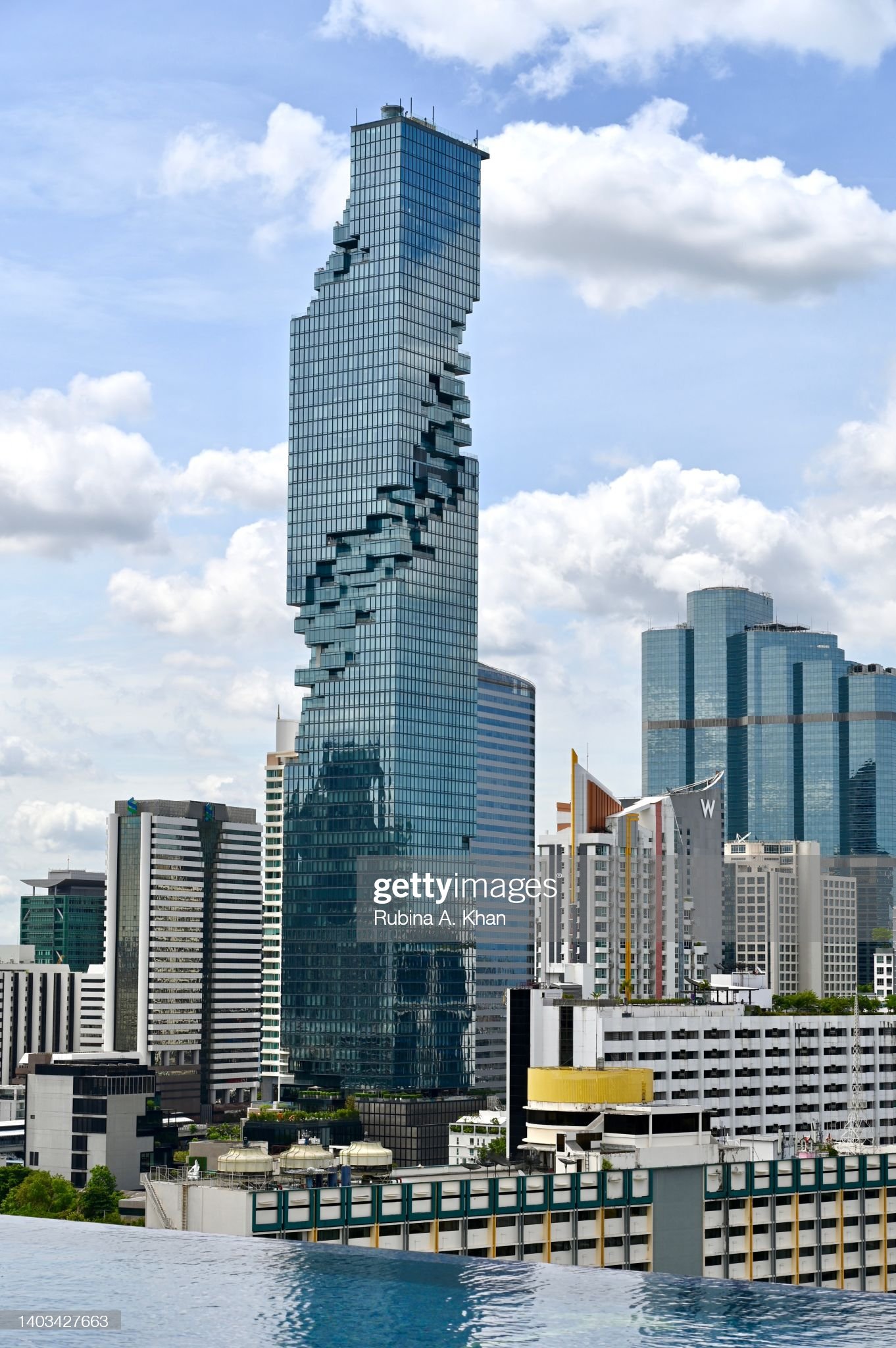
Views of the pixelated, mixed-use skyscraper, Mahanakhon, from the infinity pool of the Bangkok Marriott Hotel The Surawongse

Watching the sun go down on Bangkok from the Yao Rooftop Bar, Bangkok’s first Chinese influenced restaurant and bar, on the 33rd floor of the hotel will have you taking selfies against the stunning skyline with sweeping views of the Chao Praya river and the Mahanakhon, toasting your life. The bar is busy, the music heady and the menus are lit – they light up on touch and that’s a genius move because no one wants to read a menu full of Cantonese and Shanghainese delicacies in the dark. The retro Chinese themed Yao rooftop vibe is all about endless dumplings, dimsums and drinks, delicious living at its best, with a Thai summer breeze caressing your every move.
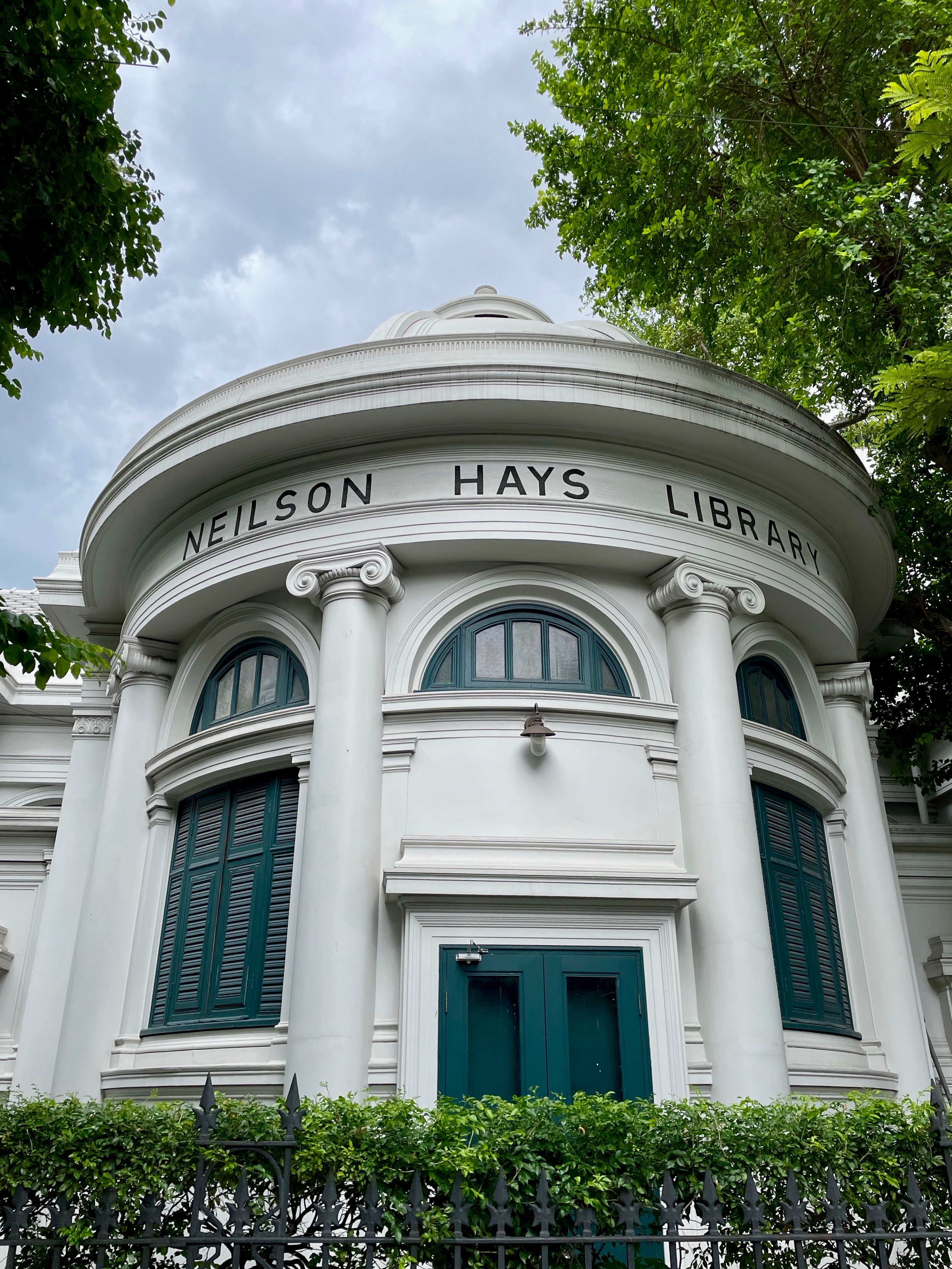
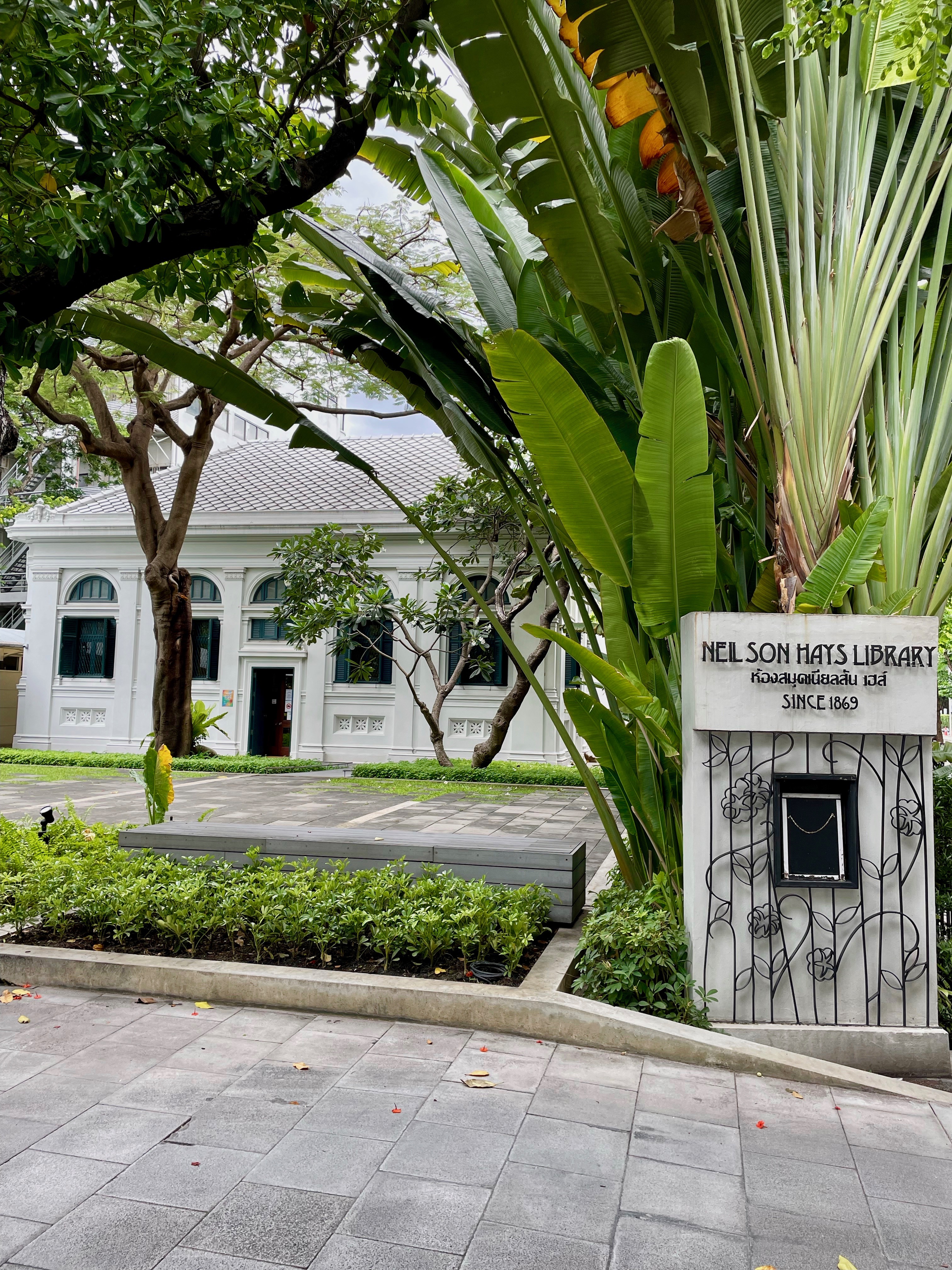
The hotel is situated diagonally across the privately-funded 101-year-old Neilson Hays Library, founded in 1869, that’s been designed in a neoclassical style by Italian architects, Mario Tamagno and Giovanni Ferrero. The library houses 20,000 books, with a variety of contemporary fiction and non-fiction, with new titles every month and it has one of the largest collections of English language titles in Bangkok. The library seeks to promote English literacy in the country and encourage a love for literature, particularly among younger generations. It is also the oldest non-profit organisation in Thailand and you can support it with 100THB to use the library’s facilities. It has events ranging from musical performances to cultural conversations for both children and adults. It has a cafe the same compound too, Palam Palam, which means “sweet taste” in Thai. The British Club of Bangkok, a private members’ Club on Thanon Surawong, founded in 1903 as a British businessmen and diplomats’ club, but has since developed over the past century to become a social, sports & cultural centre for the English-speaking community in Bangkok, is also a short walk from the hotel. The British Club organises tours on request.
This was an Eat, Sleep, Seek, Shoot and Spa trip to Thailand for me and the exemplary service at the Bangkok Marriott Hotel The Surawongse made it a flawlessly memorable experience.

Rubina’s Rating: 9/10

Disclaimer: Any part of the content on the rubinaakhan.com website cannot be reproduced without prior permission and crediting the website and the author.

©Rubina A Khan 2022

RUBINA’S REVIEW: PADMAAVAT IS THE NEW PADMAVATI

Padmaavat, with Deepika Padukone playing the valorous Queen Padmavati of Chittor, finally releases on Friday with a gender swap in its title from the original Padmavati to Padmaavat. From a film on periods (Padman) being pushed to a February release by its lead actor, Akshay Kumar, to give the period drama that is Padmaavat more theatre play due to the fiscally debilitating off-screen histrionics around it, the ongoing PMS (Padmavati Movie Stress) hasn’t abated just as yet.

I saw the film on Tuesday evening at journalist and author, Shobhaa De’s screening in Mumbai. 120 minutes into the film, I simply couldn’t fathom why the director, Sanjay Leela Bhansali would even call his film Padmavati in the first place; he very well could have called it Khilji as it’s a glorified, and almost one-directional ode to Alauddin Khilji’s insatiable lust for immortality, battle and sex. And, his relentless desire to possess Queen Padmavati of course. The film highlights the Rajput and Kshatriya codes of honour and living in a manner most celebratory, Bhansali’s chandeliers, diyas and picturesque frames notwithstanding. In no way does it demean Indian culture and its customs, and no Indian will be affronted with the film. Though Bhansali does seem to unnecessarily lionise Khilji beyond his omnipresent pillaging fame.
imagesAs the antagonist Khilji, Ranveer Singh looks menacing and monstrous physically, but his wavering accent that switches from Arabian to contemporary Hindi to Afghan, along with an inept enunciation of the language of his Sultanate, makes it difficult to believe he’s a 14th century imperial Sultan. Singh’s performance is flamboyant, loud and open to interpretation sexually, but he is not convincing as an erstwhile ruler or wannabe Alexander the Great in the making in the least. And, as for the costumery, when Singh ascends the throne of his slain uncle, Jalaluddin Khilji (Raza Murad) he wears heeled boots with the royal regalia on his person! Sure, high-heeled boots for men were in use as early as the 10th century for equestrian sports, but it seems highly unlikely that Khilji would have had access to those during his time in India.

Shahid Kapoor as Maharawal Ratan Singh of Mewar is ineffectual in the film. But in his regal dhoti/lungi, he makes for an exquisite kohl-eyed, eight pack ab-fab model that Calvin Klein needs to add to its brand new Kardashian-Jenner spread immediately! As Queen Padmavati’s paramour and subsequent husband, he is rather rigid and impassive, which is very unlike Kapoor’s able celluloid skills. Padukone is flawlessly beautiful (more so in 3D) serene and poised in every single frame, looking as cinematically desirable as she possibly can, but Kapoor meets her stellar, restrained performance with a face bereft of any emotion, romantic or otherwise. There are no subtle layers or nuances to his performance as a royal in command and especially so in the intimate scenes with Padukone. And no one does the neck quite like Shah Rukh Khan, in Khan’s own words. The only time Kapoor shines in the film is during his duel in the desert with the lust-lorn Sultan. His quiet resolve and aggressive battle moves speak volumes here.

Padmaavat plays on Khilji’s self-serving megalomania and his obsession with Padmavati’s beauty. Padmavati is his unattainable dream in the film till Padukone takes on her role as queen in the last hour of the film’s screen time. In effect, the film is a take on Khilji and his obsession with her luminous beauty that is a mere catalyst to his narcissistic lust. The battle scenes are reminiscent of Troy (2004) as is the story line pertaining to the quest and conquest of a beautiful woman. The dialogues are rife with varying language styles – in some scenes, Kapoor says waqt in a Rajasthani accent when the word samay would have worked just as well for his character. The Ghoomar song is basic, nothing extra really. It is just another well-choreographed Bollywood number and incomparable to the greats Bhansali has orchestrated in the past in films like Hum Dil De Chuke Sanam (1999) and Devdas (2002). But then, who knows what the uncut version of the song looked like! The film is based on the legend of Khilji and Padmavati, assuming everyone is aware of this historical obsession, and that does not suffice for 180 odd minutes on film. The screenplay does not offer any backstory to Khilji’s temperament or his dynasty’s reign, or take cinematic licence with Maharawal’s and Padmavati’s romantic interludes or add more authenticity to the time period the film is set in, besides heavily embroidered clothes and Bhansali-esque sets. Language, both verbal and body, is terribly askew in the film.

Padukone is the only actor who stays in character, in language and poise, and costume throughout Padmavati-turned-Padmaavat’s over three hour runtime. It is her aura and acting prowess that Padmaavat will be remembered for, not to mention also taking home the highest fee for any Indian actress to date for the film. And just for that, I am glad the film was named after her central character, with or without an “I”.

Did I like the film? Well, let’s just say I was forced into a massive historical throwback and it’s not even Thursday yet!

Disclaimer: Any part of the content on the rubinaakhan.com website cannot be reproduced without prior permission and crediting the website and the author.

©Rubina A Khan 2018

RUBINA’S REVIEW: TIGER ZINDA HAI

It’s been half a decade since Salman “Tiger” Khan’s romantic action thriller Ek Tha Tiger hit theatres on Independence Day in 2012 to a resounding ka-ching at the box office, that Yash Raj Films is all too familiar with. The film ended with India’s most indispensable RAW agent Avinash Rathore aka Tiger vamoosing off to Havana, Cuba to live a life of quiet anonymity (hah!) with his Pakistani ISI agent love, Zoya (Katrina Kaif).

tigerjpg
The sequel’s title says it all – he’s alive and kicking up powder in Austria with his son, Junior, fighting off packs of wolves (without killing them) unarmed with bare hands, skiing down the slopes, without taking off his winter jacket even once in the sequence. It cannot get any more real than that in Bollywood. And when he’s not busy playing dad or a spy in voluntary retirement, he spray-paints his love for wife Zoya on snow-capped mountain slopes to Atif Aslam’s Dil Diya Gallan in big-eyed wonderment. Nothing much has changed for Khan and his indomitable cinematic appeal since Ek Tha Tiger, though the same cannot be said for Kaif, despite her enviable pilates lean body. This Tiger is burning brighter than ever and Khan wings the film with indefatigable ease, never mind a couple of awkward supporting cast members and an askew, inconsistent pace of the film which could have been sharper and faster.

What I loved about Tiger Zinda Hai:

  1. Sheer girl power in the film. Where in Bollywood films does a wife rescue her husband in a war-struck country and drive him around without him switching to the wheel mid-save? The said wife, Katrina, is a bad-ass Bhabhi from her current location in Austria who swivels guns better than rolling pins in Ikrit, Iraq.
  2. Salman Khan skiing on the Innsbruck slopes, fully clothed.
  3. What’s better than a shirtless Salman? A bloodied warrior Salman toting double guns saving 39 Indian and Pakistani nurses!
  4. I loved Iranian born and UAE resident, Sajjad Delafrooz’s consummate performance as the antagonist Abu Usman, but for a verbose sermon he had to give Tiger at the tail end of the film. Restrained and confident acting on his part.
  5. Horses in the action sequences remind you why fast cars and bikes use horse power units of measurement in the first place and with Salman riding one, it’s a cinema freeze frame for life.
  6. Not using divisive political tactics in the film’s narrative, but humanitarian ones.
  7. The White House representative with an uncanny Sarah Huckabee accent, sans any Trumpa Loompa.
  8. The film only has two songs picturized on the lead cast of Khan and Kaif – Dil Diya Gallan in the beginning and the second, Swag Se Swagat at the end.
  9. What Khan’s presence in the Liwa Desert does for Abu Dhabi tourism is incomparable to anything they could have envisaged for themselves. And Khan wasn’t just another mirage!
  10. I had fun watching Tiger Zinda Hai and wanted to clap in all of Katrina’s bad-ass Bhabhi scenes, and most of the cool sequences.

©Rubina A Khan 2017

London’s Top 5 Luxury Hotels

“What good is money if it can’t buy happiness”, questioned British author Agatha Christie, in the thriller The Man in the Brown Suit and rightly so. London’s most luxurious modern hotels swear by that very question, albeit discreetly. The olde order of luxury in London is being challenged by a new league of modern luxury hotels where it’s all about whetting your desires and going to unimaginable lengths, realizing bespoke experiences for you. While it’s not decorous to talk about money, it’s fashionably cool to spend it in London where your money can buy you total exuberance, not just happiness!

Rubina A Khan reviews the top five hotels in London that are redefining luxurious living, irresistibly:

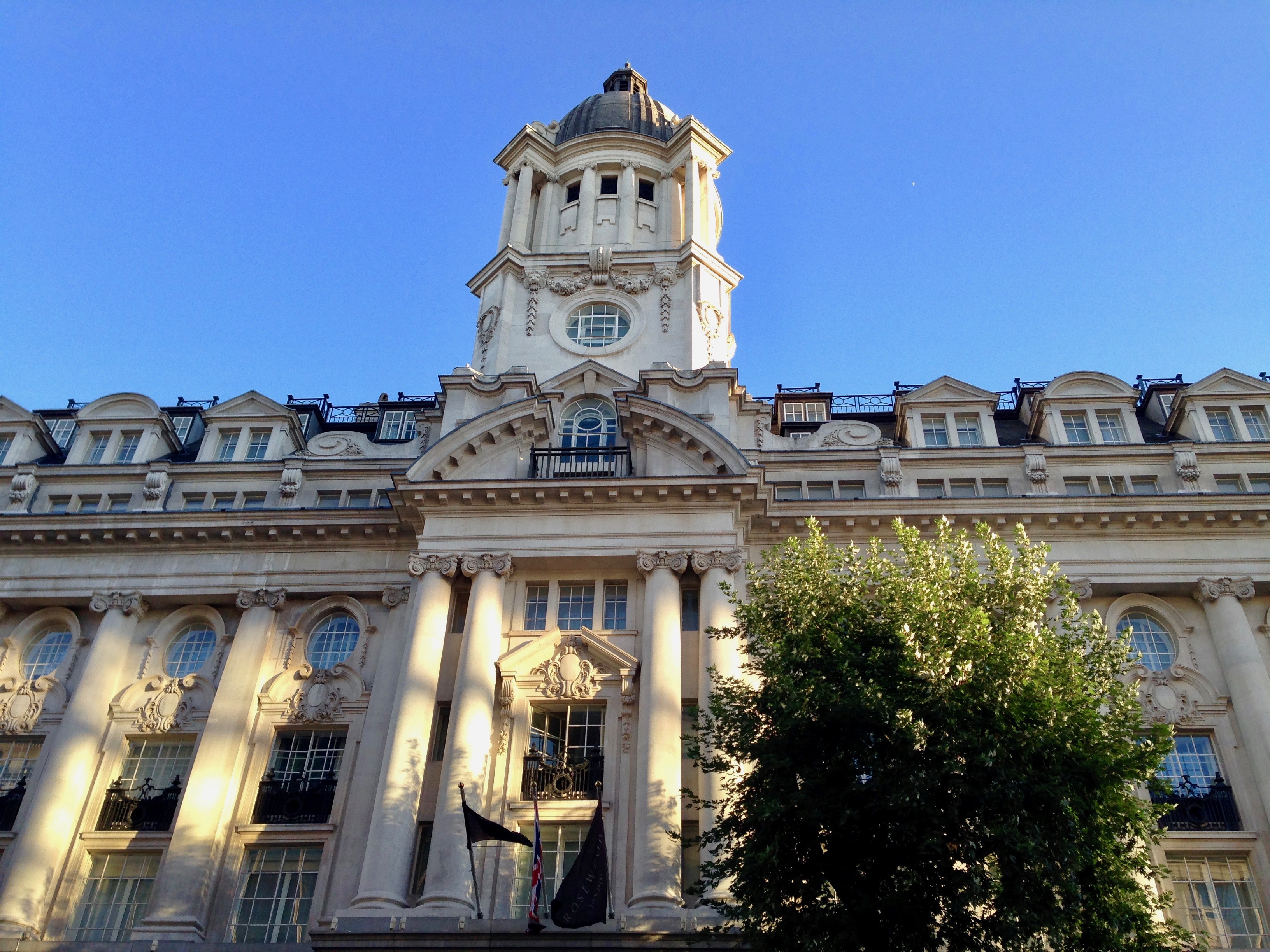
Rosewood London – A historical 1914 Belle Époque building on 252 High Holborn that used to be the Pearl Assurance insurance company, has shifted shape in a manner most luxurious under the direction of Tony Chi to give way to the Rosewood London, that has even the most seasoned jetsetter enthralled with its relaxed elegance and vintage charm. The central carriageway entrance and dome open into a grand Edwardian courtyard, that lead you into the hotel. Through the contemporary rose-bronze doors, you take in live finches and budgerigars chirping contentedly, inanimate British bulldogs that don’t bark, the exquisite art on the walls that’s set off with seductive lighting and staff walking about in Savile Row suits, making for a theatrical first impression of the Rosewood. The value of the seven kinds of rare marble like Swedish Green and Statuary, used on the seven-storey Renaissance staircase is £40million! The interiors of this Grade II listed heritage hotel are fitted out with Cuban mahogany and the 262 rooms and 44 suites reflect High Holborn’s history, culture and sensibilities, in line with the Rosewood philosophy of “A Sense of Place”.

IMG_7970

Rosewood London | Photo: Rubina A Khan

The shower rooms, yes rooms, are heavenly and designed to make every bathing ritual a sensual one, even more so after a Swedish massage by Yarmila at the Sense Spa. The champagne breakfast, with Baked Eggs, Asparagus and Truffle at the Mirror Room is the most delicious way to wake up and seize the day. Cabaret performances, held every alternate Sunday evening at the Scarfes Bar, lined with illustrations of artist Gerald Scarfe, including an adorable one of Prince George of Cambridge, over endless flutes of Perrier-Jouët Grand Brut and Lobster Momos are an excellent way to enjoy some risqué British culture after a day at the British Museum close by. The most memorable feature at the Rosewood is sheer excellence with the staff and butlers exuding genuine warmth, bereft of the faux made-to-please smiles. Nightly rates for a Deluxe Room here are upwards of £360 (Rs 36,000) and a Grand Premier Suite costs about £1,800 (Rs 1,80,000). If money is no object, then the Grand Manor House Wing, with its six bedrooms, three living rooms, a private elevator and entry, and the only suite in the world to have its very own postcode, should be your choice at £25,000 (Rs 25,000,000) at the Rosewood London!

45, Park Lane – The grandeur and exceptional service of the legendary Dorchester Hotel on Park Lane is unrivalled in London. But seconds away from the old guard, stands the Dorchester Collection’s grand and imperious 45, Park Lane, an art deco hotel, designed as a private residence, on London’s Money Mile in Mayfair, with suites facing the verdure Hyde Park. The 46-room hotel beguiles guests into its luxurious and contemporary confines designed by New York based designer, Thierry Despont, with exemplary service and dazzling glamour. The Park Lane Suite has my heart! Minutes from Bond Street shopping, and a hop across Hyde Park, it is undeniably the most fashionable temporary address in London, with every little wish of yours being fulfilled by the Park Lane team. If you so desire a dress from Harrods, a hotel runner will speed off and get it back for you in time for your dinner date whilst you soak in the satin dreaminess of the Dorchester Spa.

IMG_6579

45, Park Lane London | Photo: Rubina A Khan

“The most extraordinary demand we have ever had to date was to fit a washing machine in one of our suites!” says hotel manager Christophe Hilty. For a brisk ride in Hyde Park, you can borrow one of the hotel’s Brompton bicycles or bike around the streets of Mayfair. It’s on site restaurant, CUT, which is Austrian born-US based celebrity chef Wolfgang Puck’s first foray on European terrain, is world class. It’s the only place in London that serves Japanese Wagyu and it is worth every pound for that little medallion of a steak on your plate! CUT is also home to the Psalms, a collection of 16 Damian Hirst paintings in the hotel. Rooms start at £595 (Rs 59,500) and the extravagant Penthouse Suite on the ninth floor is yours for £8,995 (Rs 8,99,500) a night!

Ham Yard Hotel – The Ham Yard, a Firmdale property and their eighth in London, owes its name to an early 18th Century public house called The Ham. This boutique hotel, set on a three-quarter acre site, is a riot of colors designed by owner, Kit Kemp, in her fun and distinctively modern British style, that gives off a cultivated “urban village” vibe with its lush garden, bang in the midst of bustling Piccadilly Circus and Soho. With a 190-seater movie theatre on the property and its very own Dive Bar, you don’t need to battle frosty London on movie night; it’s just an elevator ride away. An original 1950s four-lane bowling alley, shipped in from Texas, replete with backlit bowling balls and vintage bowling shoes, a 13-store shopping enclave, a rooftop garden and a Soholistic Spa make the Ham Yard a unique hotel choice. The hotel has the best-stocked mini-bar and amenities kit, including Kinky Knickers, in case you packed really light and didn’t carry any! The Ham Yard breakfast-to-go service is an absolute delight in a brown bag when you’re catching an 8am flight from Heathrow! Prices for a Superior Room start at £372 (Rs 37,200) per night and the Terrace Suite is yours for £4,080 (Rs 4,08,000) a night.

IMG_7202

Ham Yard London | Photo: Rubina A Khan

Great Northern Hotel – This boutique hotel right in the heart of King’s Cross St Pancras, first opened in 1854, as the world’s first great railway hotel, designed by Victorian master builder, Lewis Cubitt. The splendidly refurbished 91 rooms here, named Couchette, Wainscot and Cubitt, which is the largest room, echo the vintage glamour of the building’s iconic past. Awash with abundant natural light through ceiling to floor windows and cut-glass finishes, the Great Northern boasts of a luxury every traveler desires – location and quietude! It is central to the largest transport intersection in London and is a mere 25 metres from the Eurostar Terminus and a second away from King’s Cross that makes for seamless travel to and from all Londonairports. It is steps away from the beautiful British Library. It has one exceptional feature within its glamourous boutique designs – a very comfortable Hypnos bed that also makes for great romantic interludes! Sleep is the quintessential luxury that sometimes gets lost in translation in some of world’s most famous hotels, and it is absolutely uncompromised at the Great Northern. Plum & Spilt Milk, the hotels’ on site restaurant, under the culinary direction of Chef Mark Sargeant, is spectacular! The exquisite food, atmosphere and service here are enough to extend your stay at the GNH, if not the bed alone! Rooms start upwards of £160 (Rs 16,000) here.

Screen Shot 2019-08-12 at 6.01.13 PM

Great Northern London

Ampersand Hotel – The design of the luxuriously appointed Ampersand Hotel on 10, Harrington Road, right by the South Kensington underground, is inspired by the Museum District it’s located around, through the five themes of botany, music, geometry, ornithology and astronomy. The Ampersand opened in the summer of 2012 as a modern incarnation of the Norfolk Hotel that was built in 1889. The Victorian values of discovery and wonder, alongside a modern sense of whimsy define all 111 rooms of the refitted Ampersand rooms and suites; from the V&A’s costume collection, to the Science Museum’s planets and phials, from the Natural History Museum’s ornithological drawings to the drama and ceremony of the Royal Albert Hall. And no, that doesn’t make it a dull and boring hotel. The atmosphere is exuberant and fun, with splashes of colour and sparkle to add to the relaxed vibe of the property. Knightsbridge and Chelsea shopping awaits you, yes, Harrods too, once you’ve had your fill of the museums and the astounding array of world cuisine being served up in the cafes and restaurants on every expensive retail space of South Kensington! Room prices vacillate anywhere between £170 (Rs 17,000) to approximately £550 (Rs 55,000) a night.

IMG_5998

The Ampersand London | Photo: Rubina A Khan

Michael Bonsor, Hotel Manager, of the Rosewood London, sums up the avant-garde London luxury order rather succinctly, “No requests are too outlandish or difficult to accomplish. True luxury is not just about remarkable quality; it is about making someone feel special in an extraordinary environment.” Indeed!

Disclaimer: Any part of the content on the www.rubinaakhan.com website cannot be reproduced without prior permission and crediting the website and the author.
@Rubina A Khan 2014